
Air Conditioning Guide | Buying, Choosing & Using the Right AC

Essential Guide to Buying and Using Air Conditioning AC
Choosing the right air conditioner for your home or business involves much more than picking the cheapest unit off the shelf. The best air conditioning AC decision depends on correct room sizing, energy efficiency, inverter technology, installation quality and long-term running costs. Get any of these wrong and you end up with an uncomfortable space, rising electricity bills, or an aircon unit that fails years before it should.
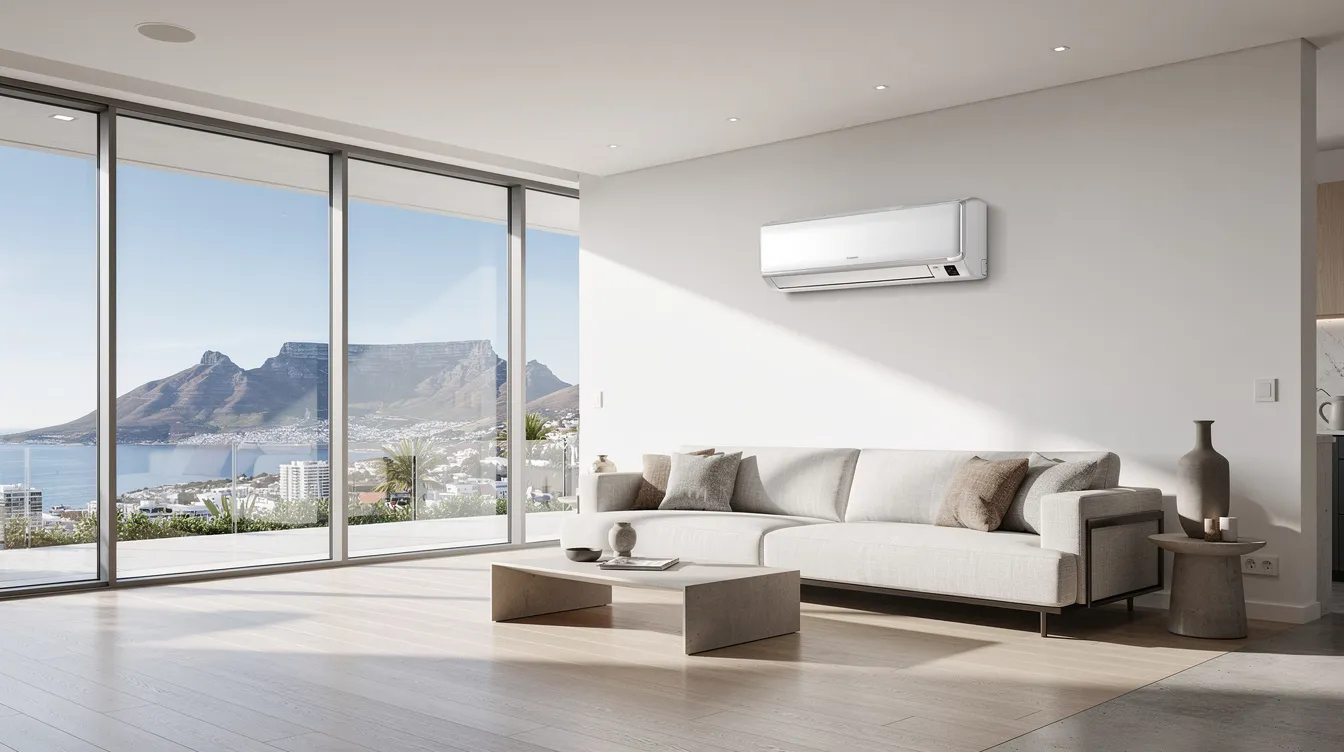
This guide focuses on air conditioning in Cape Town and the Western Cape, where summer temperatures regularly push into the low 30s, coastal salt air accelerates corrosion, and electricity tariffs sit between R3.50 and R4.50 per kWh. In this environment, smart AC choices are not optional. Coolflow Air Conditioning is a local specialist helping homeowners and businesses choose, buy, install and maintain air conditioning systems across the region.
Get Expert Help With Air Conditioning in Cape Town
Planning to buy or install an air conditioner in Cape Town? Call Coolflow Air Conditioning on 078 772 0455 or email info@coolflowaircon.co.za for professional sizing, supply and installation across the Western Cape.
Coolflow provides end-to-end service for both residential air conditioning and commercial air conditioning, covering everything from product advice and on-site BTU assessments to professional air conditioning installation, servicing and repairs. Whether you need a 9000 BTU bedroom unit or a 24000 BTU commercial system, Coolflow can help.
What Is Air Conditioning and How Does an AC Work?
An air conditioner does not generate cold air. Instead, it transfers heat from your indoor space to the outside environment. Air conditioning uses the vapor-compression cycle to cool air, and the cooling cycle relies on four main components: compressor, condenser, expansion valve, and evaporator.
Here is how it works in simple terms:
- Warm indoor air is drawn across the evaporator coil inside the indoor unit. Evaporator coils absorb heat from indoor air, with evaporation turning refrigerant from liquid to gas.
- Compressors increase the pressure of the refrigerant gas, raising its temperature, and pump it to the outdoor unit to maintain refrigerant flow through the system.
- The condenser coil in the outdoor unit releases heat from the refrigerant into the outdoor air, cooling it back into a liquid state.
- Expansion valves then lower the pressure of the refrigerant, reducing its temperature before it re-enters the evaporator to repeat the cycle.
A typical air conditioning system includes an indoor and outdoor unit, and in split systems the indoor section is often called the air handler. Air conditioners remove heat and moisture from indoor air and release thermal energy outside. As air passes over the cold evaporator coil, moisture condenses and drains away through a condensate pipe, which is why a correct drain slope is important to prevent water backing up indoors. Air conditioners can achieve 30% to 60% relative humidity indoors, making rooms feel noticeably more comfortable.
Modern split air conditioners often function as a heat pump, reversing the cycle to provide heating during Cape Town’s mild but wet winters, delivering year round comfort from a single system.
Types of Air Conditioning Systems
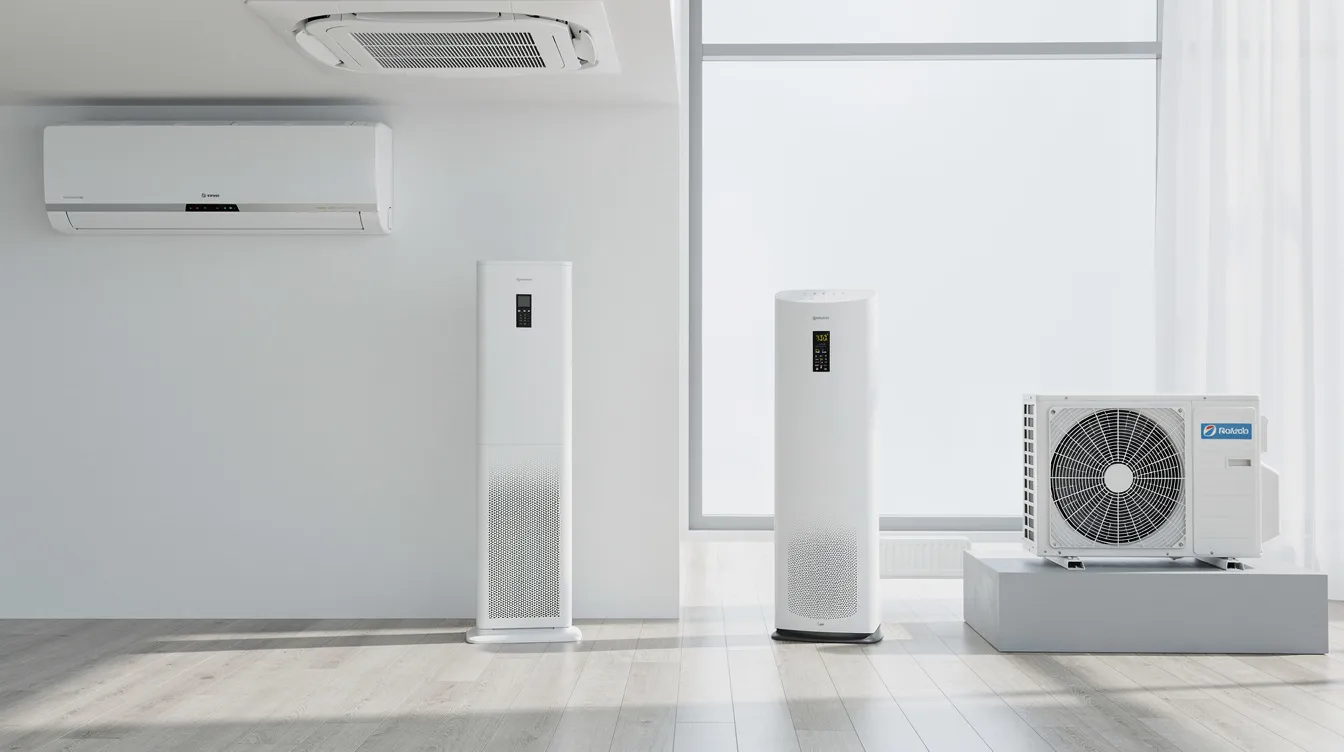
Buyers can choose from several air conditioning systems depending on room type, budget and aesthetic preference. Residential air conditioning has come a long way since Carrier’s first residential air conditioning system was installed in 1914. Today, the main options include wall-mounted splits, cassette units, floor-standing systems, and more.
Coolflow mainly supplies and installs high-efficiency split-system air conditioners in Cape Town homes and offices, as these offer the best balance of performance and value for most situations. Other system types exist too: packaged air conditioners house all components in one outdoor unit, window air conditioners are installed in window frames or walls, and portable air conditioners have indoor units on wheels, though these are less common for permanent installations.
Wall-Mounted Split Air Conditioners
Wall mounted split air conditioners are the most popular choice for bedrooms, lounges, apartments and small offices in Cape Town. Split-system air conditioners use indoor and outdoor units connected by refrigerant lines, with the quiet indoor unit, commonly called the air handler, mounted high on a wall and a compact outdoor condenser unit positioned on an external wall or balcony.
The first wall-mounted mini split air conditioner was sold in 1968, and the technology has evolved dramatically since then. Modern wall-mounted units are designed to blend with room decor, featuring slim profiles and neutral colours. Wall-mounted air conditioners can cool multiple rooms simultaneously when combined in a multi-split configuration, where one outdoor unit serves several indoor heads. Ductless systems provide targeted cooling without ductwork, while central split systems distribute conditioned air through ducts, making them ideal for retrofitting older Cape Town properties.
Noise levels in air conditioning units are measured in decibels and directly impact user comfort, so look for models rated below 30 dB(A) for bedroom use. These aircon units are available from compact 9000 BTU options for small bedrooms up to 18000 BTU models for larger lounges.
Inverter Air Conditioners
An inverter air conditioner uses a variable-speed compressor that adjusts output to match the room’s cooling or heating demand. Inverter controls continuously adjust compressor speed to match demand. Inverter technology allows compressors to adjust speed dynamically for better energy conservation and quieter operation, rather than cycling on and off at full power.
For Cape Town users, the benefits are significant: smoother temperature control, reduced energy bills, and noticeably quieter operation during long summer days. Inverter aircon units are especially worthwhile when the AC runs for many hours daily, such as in home offices, lounges or busy commercial spaces. A 12000 BTU inverter unit operating 8 hours daily in Cape Town costs approximately R340–R470 per month, making efficient cooling affordable for regular use.
Non-Inverter Air Conditioners
Non-inverter air conditioners use a fixed-speed compressor that cycles on and off at full capacity to maintain the set temperature. The key advantage is a lower purchase price and simpler design, which can suit spare rooms or spaces used only occasionally.
The trade-off is more noticeable temperature swings and potentially higher running costs when used many hours per day. Non-inverter units can consume 30–50% more electricity than comparable inverter models under similar daily use. That said, non-inverter AC is not inherently a poor choice. For a guest room used a few times per month, the lower upfront cost may make perfect sense. If you are unsure, contact Coolflow for case-specific advice.
Cassette Air Conditioning
Cassette air conditioning units are recessed into a ceiling void, with only a decorative grille visible from below. Airflow typically comes from four sides of the cassette, providing even air distribution across larger open spaces.
Typical Cape Town applications include offices in Century City, boardrooms in Claremont, or restaurant dining areas in the CBD where floor and wall space is limited. Installation requires adequate ceiling void space and access for piping to the outdoor unit. Cassette systems are generally better suited to commercial air conditioning than small bedrooms.
Floor-Standing Air Conditioners
Floor-standing air conditioners sit on or near the floor and are useful where wall space is limited or high walls are fully glazed:
- Large lounges and showrooms in Bellville or Brackenfell
- Church halls or community spaces
- Commercial environments needing strong low-level airflow
These systems still require an outdoor unit, similar to wall-mounted split air conditioners, and are available in different styles to suit various interior layouts.
How to Choose the Right Air Conditioner
The best air conditioner for your space depends on several key factors, not just brand or price. Before purchasing, consider:
- Room dimensions and ceiling height – larger volumes need more cooling capacity
- Windows and sun exposure – west-facing glass in Cape Town absorbs intense afternoon heat, and larger glass area or greater window surface exposure increases heat gain
- Internal heat load – occupants, computers, lighting and appliances all add heat, especially in commercial settings
- Insulation quality – poorly insulated walls and ceilings let heat in faster
- Usage patterns – a home office running AC all day has different needs than a bedroom used only at night
- Budget and lifecycle cost – balance initial aircon prices against energy efficiency, inverter technology and long-term electricity and maintenance costs
- Brand support – availability of parts, warranty backing and trusted local installers matters in South Africa
Choosing the correct BTU size to match your air conditioner room size is critical. Bigger is not always better: an oversized unit can cause short cycling, uneven temperatures and humidity issues. Coolflow Air Conditioning offers on-site assessments to calculate the right capacity for your specific space.
Understanding Air Conditioner BTU Sizes
BTU/h (British Thermal Units per hour) measures how much heat an air conditioner can remove from a room each hour. A higher BTU rating means greater cooling capacity. Matching BTU size to your room’s actual heat load is essential – both undersized and oversized air conditioners cause comfort and efficiency problems.
| Aircon Size | Typical Application | General Starting Room Size |
|---|---|---|
| 9,000 BTU | Bedroom / small office | ±12–18 m² |
| 12,000 BTU | Medium bedroom / office | ±18–25 m² |
| 18,000 BTU | Large lounge / open-plan area | ±25–35 m² |
| 24,000 BTU | Large room / selected commercial area | ±35–50 m² |
These are general starting guidelines, not guaranteed sizing. Actual requirements depend on ceiling height, insulation, window size and orientation, number of occupants, and heat-generating equipment. In Cape Town, the moderate Mediterranean climate means you may need around 5% less capacity than in hotter, more humid cities like Durban, but west-facing rooms or spaces with large glass areas may need more. Contact Coolflow for a proper heat-load calculation before purchasing.
9000 BTU Air Conditioner
A 9000 BTU air conditioner is typically suitable for small bedrooms, studies and compact home offices of around 12–18 m² under average conditions. Common Cape Town applications include small bedrooms in Table View apartments, student rooms in Rondebosch, or compact consulting rooms.
A 9000 BTU inverter model is popular as a bedroom air conditioner because it runs quietly, maintains stable overnight temperatures and uses relatively little electricity. This size is generally not suitable for large lounges or open-plan spaces with high ceilings. Ask Coolflow to confirm whether a 9000 BTU aircon matches your specific room.
12000 BTU Air Conditioner
A 12000 BTU air conditioner is a common choice for medium bedrooms, small lounges or typical home offices of roughly 18–25 m². A 12000 BTU inverter unit is often ideal where the aircon runs many hours per day, balancing performance with energy saving.
Realistic example spaces include larger master bedrooms in Durbanville, consulting rooms in medical practices, or enclosed offices in Century City. This size is often considered a sweet-spot air conditioner for bedroom and medium-sized rooms in South African homes. Sun-exposed or poorly insulated rooms may still require a higher BTU – have your space assessed individually.
18000 BTU Air Conditioner
An 18000 BTU air conditioner suits larger lounges, open-plan living areas and bigger offices in the ±25–35 m² range. Think open-plan lounges in Bloubergstrand apartments, small restaurant dining areas, or medium-sized offices needing efficient cooling through the hottest part of the day.
An 18000 BTU inverter system is popular for main living areas and works well as an aircon for lounge or large room use. If your space is double-volume, has sliding doors that open frequently, or combines a kitchen and living area, expert sizing advice is recommended.
24000 BTU Air Conditioner
A 24000 BTU air conditioner is a large-capacity air conditioner unit for big lounges, open-plan homes, larger offices or selected commercial spaces in the ±35–50 m² starting range. These are commonly used in open-plan living/dining/kitchen areas in larger Western Cape homes, or in boardrooms and small retail stores.
A 24000 BTU inverter system is especially valuable where long daily run-times and high heat loads would otherwise drive up energy bills significantly. In some cases, multiple smaller air conditioners or a ductless mini-split system connecting one outdoor unit to multiple indoor units may perform better than a single oversized unit.
Inverter vs Non-Inverter Air Conditioning
This is one of the most important buying decisions, affecting both upfront air conditioner prices and long-term running costs.
| Feature | Inverter AC | Non-Inverter AC |
|---|---|---|
| Compressor | Variable speed | Fixed speed (on/off) |
| Temperature stability | More consistent | More variation |
| Energy efficiency | Generally better for regular use | Generally lower |
| Noise | Often quieter | More noticeable cycling |
| Initial price | Usually higher | Usually lower |
| Frequent use | Strong option | Depends on application |
| Long-term cost | Can be lower | Can be higher |
While inverter AC usually offers better energy efficiency in regular daily use, a non-inverter aircon can still be suitable for occasional-use rooms with tight budgets. Rather than relying on generic percentage claims, discuss your actual usage pattern with Coolflow to determine whether an inverter air conditioner is the right investment.
How Much Does an Air Conditioner Cost?
Air conditioner prices in South Africa vary based on BTU size, inverter vs non-inverter technology, brand, energy efficiency rating, and features like Wi-Fi control or heating capability. Local factors in Cape Town can also influence air conditioning cost, including seasonal demand during heatwaves, stock availability and brand promotions.
The cheapest air conditioner is not always the best value if it is inefficient, too small, or poorly supported for spare parts. AC installation services can include delivery and setup of units, but these costs are usually quoted separately. Contact Coolflow Air Conditioning for transparent quotes that clearly separate product price from installation cost. Check the current Coolflow shop or request an up-to-date quotation for accurate aircon prices.
Air Conditioner Installation Cost
Aircon installation cost is usually quoted separately from the unit price and varies depending on site conditions. Major cost drivers include:
- Distance between indoor and outdoor units and resulting copper pipe length
- Pipe insulation quality and electrical cabling requirements
- Condensate drainage routing and wall construction (brick vs concrete)
- Installation height and access difficulty
- Brackets, trunking and finishing
Cape Town scenarios that add complexity include high-rise apartments in the CBD, difficult roof access in older homes, or long pipe runs needed to place the outdoor unit away from direct sea spray. Companies like AC Direct have over 150 installation teams in South Africa and AC Direct delivers and installs air conditioners nationwide, but for Cape Town-specific expertise and coastal considerations, local knowledge matters. Contact your aircon installer Cape Town for an indicative quote – sending photos or plans helps Coolflow provide accurate estimates.
Why Professional Aircon Installation Matters
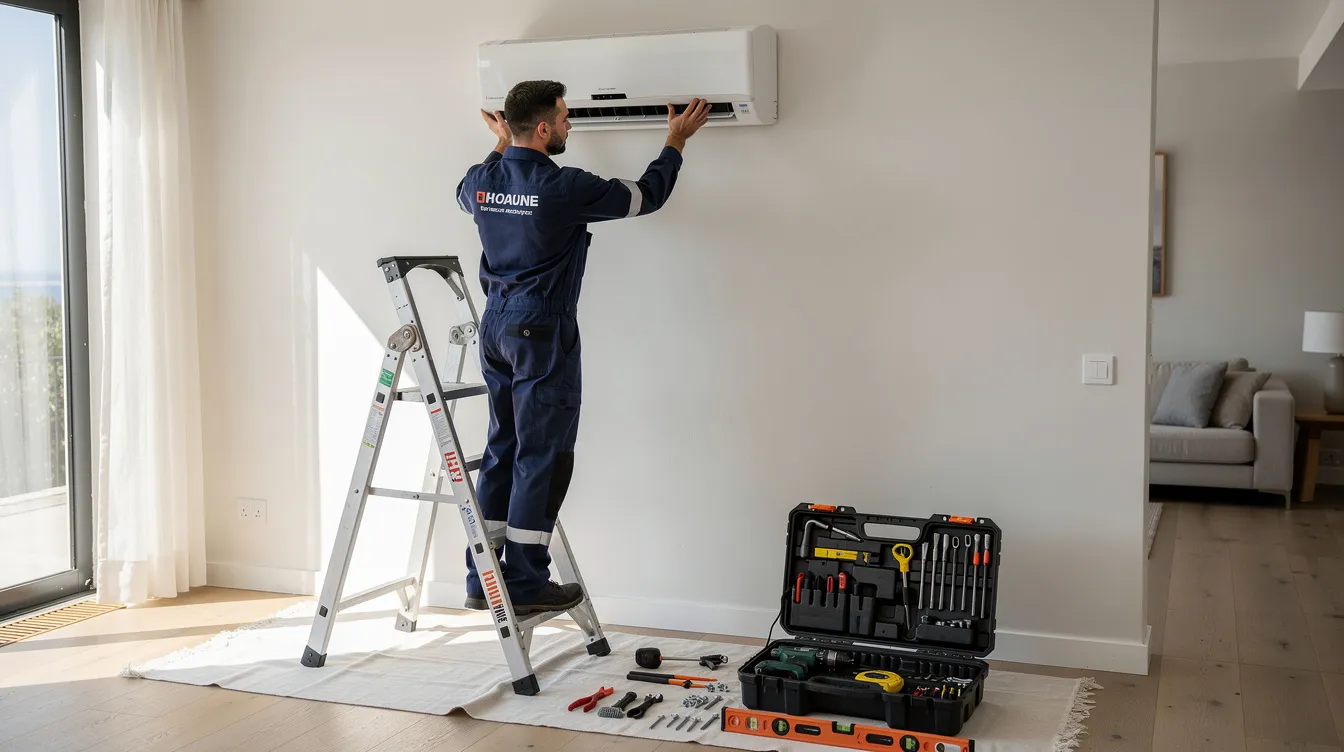
Proper installation is crucial for maximizing efficiency and lifespan of air conditioning systems. Even a premium air conditioner can underperform or fail early if incorrectly sized, poorly positioned or badly installed. Professional installation ensures optimal performance of air conditioning units.
Key installation practices include:
- Indoor unit positioning – away from obstructions, at the right height, not blowing directly onto beds or workstations
- Outdoor condenser unit placement – ensuring good airflow, secure mounting, and protection from coastal corrosion in seaside suburbs like Melkbosstrand and Big Bay
- Refrigerant piping – correctly sized and insulated copper pipe runs, with a deep vacuum drawn and leak testing completed before commissioning
- Condensate drainage – proper slope to prevent indoor water leaks
- Electrical safety – dedicated circuits, correct cable sizing and surge protection, especially important given Cape Town’s history of load-shedding and power quality issues
Avoid cheap installations that skip vacuuming or electrical compliance. These shortcuts lead to expensive air conditioning repair down the line.
How to Use an Air Conditioner Efficiently
Reducing your air conditioner running cost while staying comfortable is straightforward with a few good habits:
Choose a sensible set temperature. Setting your thermostat to a moderate level, around 23°C in summer, offers a good balance between comfort and cost. Every degree lower increases energy use noticeably. Air conditioners can reduce cooling costs by up to 90% through dehumidification alone, so a slightly higher setpoint can still feel comfortable when humidity is controlled.
Keep doors and windows closed. Open windows force the system to work harder, wasting electricity and reducing efficient cooling. That contrasts with evaporative cooling, which relies on outside air moving through the home to work properly.
Block direct sunlight. Use curtains, blinds or exterior shading on west-facing windows. Cape Town afternoon sun can add significant heat load to a room.
Use timers and scheduling. Avoid running AC when rooms are unoccupied. Inverter air conditioners are particularly effective when used with stable, moderate setpoints rather than constant temperature changes.
Clean filters regularly. Regular maintenance includes cleaning or replacing air filters to maintain efficiency. Dirty filters can increase electricity consumption by 15–30%, according to local industry sources.
Keep the outdoor unit clear. Remove obstructions and rinse salt deposits off condenser fins in coastal homes.
For more tips on reducing electricity consumption, consult Eskom’s energy saving guidance.
How Much Electricity Does an Air Conditioner Use?
BTU cooling capacity is not the same as electrical input power. Two 12000 BTU units can use very different amounts of electricity depending on efficiency and inverter technology.
Power consumption depends on model efficiency, thermostat setpoint, outdoor temperature, insulation quality, how often doors open, and filter cleanliness. Energy efficiency in air conditioning is measured by ratings like SEER and EER, while the coefficient of performance (COP) measures air conditioning efficiency in heating mode. Look for the rated input power (kW) on the unit’s energy label and check the South African energy efficiency standards (MEPS under VC 9008) for compliance and rating information.
When comparing models, look for energy efficient air conditioners with strong energy labels and inverter technology where budget allows. Contact Coolflow if you want help comparing expected running costs for a specific property.
What Temperature Should You Set Your Air Conditioner?
There is no single perfect temperature for everyone, but Eskom-aligned guidance suggests that around 23°C in summer is a good balance between comfort and energy efficiency for most South African homes.
Setting an air conditioner to very low temperatures like 18°C significantly increases electricity consumption and can create an uncomfortably cold indoor space. Experiment within a small range – say 22–24°C – to find your comfort point. In winter, heating setpoints should also be moderate, especially when using a heat pump as the primary heating source.
A useful tip: dehumidification can make a room feel cooler even at a slightly higher temperature, since removing moisture from indoor air improves perceived comfort.
Air Conditioner Maintenance
Maintaining your air conditioner keeps it running efficiently and extends its lifespan. Split maintenance into what you can do yourself and what needs a professional.
Homeowner tasks:
- Clean or replace filters monthly to maintain airflow
- Keep indoor and outdoor grilles free of dust and obstructions
- Ensure the outdoor unit has clear airflow on all sides
- Watch for unusual noises, smells or water leaks
Professional aircon service checklist:
- Deep cleaning of indoor and outdoor coils
- Electrical connection inspection
- Condensate drain flushing
- Operating pressure and temperature checks
- System performance verification against manufacturer specifications
For regularly used systems, schedule professional servicing at least once a year. Coastal properties within 500 m of the ocean may need servicing every 6 months due to accelerated corrosion from salt air. Book routine maintenance with Coolflow to maintain performance and warranty compliance.
Does an Air Conditioner Need Regassing?
Modern air conditioners use refrigerant in a sealed circuit, and gas is not consumed during normal operation. Regular regassing should not be necessary.
If an AC needs gas, it usually indicates a leak or installation problem that must be found and repaired, not just topped up. Common leak causes include poor flare joints, damaged pipes, corrosion (especially in coastal areas), or accidental damage to the outdoor unit.
Be cautious of companies offering quick gas top-ups without leak detection. This wastes money and releases environmentally harmful refrigerant. If you notice declining cooling performance or hissing sounds, contact Coolflow for proper diagnosis. Learn more about aircon regas Cape Town and what a proper refrigerant service involves.
Common Air Conditioner Problems
Here are the most frequent issues and their likely causes:
- AC not cooling – dirty filters, low refrigerant, blocked airflow, or compressor issues
- Weak airflow – clogged filters, blocked vents, or fan motor problems
- Water leaking from indoor unit – blocked condensate drain, incorrect drain slope
- Strange noises – loose components, fan blade issues, or debris in the outdoor unit
- Bad smells – mould or bacteria growing on the evaporator coil
- Unit switching off randomly – thermostat sensor issues, overheating, or electrical faults
- Frozen coils – restricted airflow from dirty filters or low refrigerant
- Electrical tripping – capacitor failure, short circuits, or overloaded circuits
- Outdoor unit not running – control board (PCB) failure, often caused by power surges
Homeowners can safely check filters, settings and remote batteries. For electrical smells, frequent tripping or suspected refrigerant leaks, switch off the system and contact a qualified technician. Coolflow provides diagnostics and air conditioning repair across Cape Town and the Western Cape.
When Should You Repair or Replace an Air Conditioner?
Deciding between repair and replacement depends on several factors:
- System age – well-maintained units can last 10–15 years, but coastal exposure shortens this
- Fault type – a minor sensor replacement is very different from a compressor failure
- Repair cost vs replacement cost – if a single repair exceeds 40–50% of a new unit’s price, replacement often makes more sense
- Energy efficiency – older non-inverter units may cost significantly more to run than modern inverter systems
- Refrigerant type – units using older refrigerants like R22 are being phased out, making future servicing difficult
Many issues are worth repairing, especially on relatively new systems from reputable brands with good parts availability. For a clear comparison, request an itemised quote from Coolflow comparing repair costs against the likely lifespan and efficiency benefits of a new aircon.
Best Air Conditioner Brands to Consider
Leading air conditioner brands available in South Africa include Samsung, LG, Daikin, Midea, Alliance, Gree, Hisense, Carrier and Mitsubishi Electric. Coolflow helps clients choose between these based on efficiency, performance, noise levels, features and budget.
Look beyond the badge and compare warranty terms, local parts support and real-world reliability in South African conditions. Samsung air conditioners are popular for their inverter technology and smart features. For an overview of LG’s residential air conditioning range, their official South Africa page provides detailed specifications.
Residential Air Conditioning
Coolflow designs home air conditioning systems for bedrooms, lounges, open-plan living spaces, apartments and townhouses across Cape Town. Residential needs vary: bedrooms require quiet operation, lounges need strong but even airflow, and whole-day home offices benefit from energy saving aircon solutions.
Common residential choices include wall-mounted split inverter air conditioners and small cassette units for specific open-plan areas. Cape Town homes often present unique challenges: west-facing glass, double-volume spaces, heritage building restrictions and coastal corrosion on outdoor units all require careful planning. Ductless mini-split systems, which connect outdoor units to multiple indoor units, are increasingly popular for homes needing air conditioning in several rooms from a single outdoor condenser.
Commercial Air Conditioning
Coolflow provides commercial air conditioning for offices, retail shops, restaurants, guesthouses, salons, clinics and other business premises across the Western Cape. Commercial air conditioning design must account for higher internal heat loads from people, computers, lighting and equipment, as well as longer daily operating hours.
Typical commercial systems include cassette air conditioning for open-plan offices, ducted splits for larger premises, which distribute conditioned air through ducts, and multi-split configurations for multiple rooms. Whether you are fitting out a restaurant in the Cape Town CBD or an office in Century City, contact Coolflow for a site survey and tailored commercial AC proposal.
Air Conditioning Installation in Cape Town & Western Cape
Coolflow Air Conditioning provides full-service air conditioning across Cape Town and the Western Cape: site inspections, BTU sizing, air conditioner selection, supply, professional installation, servicing, repairs and aircon regas diagnosis.
Service areas include Cape Town, Milnerton, Century City, Table View, Parklands, Bloubergstrand, Big Bay, West Beach, Melkbosstrand, Bothasig, Edgemead, Durbanville, Bellville, Brackenfell, Rondebosch, Claremont, Constantia, Hout Bay, Noordhoek, Kommetjie, Fish Hoek, Simon’s Town, Somerset West and Stellenbosch. Whether you need a new aircon installation or replacement of an ageing unit, Coolflow can assist.
Need an air conditioner installed? Call Coolflow on 078 772 0455 or email info@coolflowaircon.co.za for quotes on 9000–24000 BTU inverter and non-inverter systems.
Frequently Asked Questions About Air Conditioning AC
Below are the most common questions Cape Town residents ask before buying, installing or using an air conditioner.
What is the best type of air conditioner to buy? For most Cape Town homes and offices, a wall-mounted split inverter air conditioner offers the best combination of efficiency, quiet operation and value. The ideal type depends on your room layout, budget and usage requirements.
How do I choose the right air conditioner? Consider room size, ceiling height, insulation, window exposure, number of occupants and how many hours you will use the AC daily. A professional assessment ensures accurate sizing.
What size air conditioner do I need? Use BTU sizing as a starting guide: 9000 BTU for small rooms (12–18 m²), 12000 BTU for medium rooms (18–25 m²), 18000 BTU for larger spaces (25–35 m²), and 24000 BTU for big rooms (35–50 m²). Actual needs depend on multiple variables.
What does BTU mean in air conditioning? BTU stands for British Thermal Units per hour. It measures how much heat an air conditioner can remove from a room. Higher BTU means greater cooling capacity.
Is inverter aircon better than normal aircon? Inverter aircon generally offers better energy efficiency, quieter operation and more stable temperatures during regular daily use. Non-inverter AC may suit occasional-use rooms where the lower purchase price is the priority.
How much does an air conditioner cost in South Africa? Prices vary by BTU size, brand, technology and features. Contact Coolflow for current pricing rather than relying on outdated online figures.
How much does aircon installation cost in Cape Town? Installation cost depends on pipe run length, electrical requirements, wall construction, mounting height and access difficulty. Request a site-specific quote from Coolflow.
How much electricity does an air conditioner use? Consumption varies by model efficiency, BTU capacity, thermostat setting and usage hours. Check the rated input power on the energy label and compare EER ratings between models.
What temperature should I set my air conditioner in summer? Around 23°C is a widely recommended energy-efficient setting for summer. Adjust within a 22–24°C range to find your personal comfort level.
Which aircon is best for a bedroom? A 9000 BTU or 12000 BTU inverter split unit is typically ideal for bedrooms, offering quiet operation and stable overnight temperatures.
What size aircon is best for a lounge? Most lounges in South African homes need an 18000 BTU or 24000 BTU air conditioner, depending on room size, layout and sun exposure.
How often should an air conditioner be serviced? At least once a year for regularly used systems. Coastal properties may need servicing every six months due to salt air corrosion.
Does an air conditioner need regassing? Not under normal operation. If refrigerant is low, a technician should locate and repair the leak rather than simply topping up gas.
Why is my air conditioner not cooling? Common causes include dirty filters, low refrigerant, blocked airflow or component faults. Clean the filters first, then call a technician if performance does not improve.
How long should an air conditioner last? A well-maintained split system typically lasts 10–15 years. Coastal exposure and poor maintenance can shorten this significantly.
Is it better to repair or replace an old air conditioner? It depends on system age, fault severity, repair cost and energy efficiency. If repair costs approach half the price of a new unit, replacement is often the better investment.
Where can I buy an air conditioner in Cape Town? Coolflow Air Conditioning supplies multiple variants of air conditioning units for sale across Cape Town and the Western Cape, with all the benefits of professional sizing advice and expert installation.
Does Coolflow supply and install air conditioners? Yes. Coolflow provides air conditioner supply, professional installation, servicing, repairs and refrigerant fault diagnosis throughout Cape Town and the Western Cape.
Have a question not covered here? Call Coolflow on 078 772 0455 or email info@coolflowaircon.co.za.
Need Help Choosing or Installing an Air Conditioner?
Choosing the right air conditioning system is an investment in comfort, efficiency and long-term value. Whether you need a quiet 9000 BTU bedroom unit, a 12000 BTU home office aircon, an 18000 BTU lounge system or a powerful 24000 BTU commercial solution, Coolflow Air Conditioning can help you make the right choice.
Get in touch for BTU sizing advice, personalised product recommendations, supply and installation quotations, or to book servicing, repairs and aircon regas diagnostics.
Coolflow Air Conditioning Phone: 078 772 0455 Email: info@coolflowaircon.co.za Serving Cape Town and the Western Cape
Call 078 772 0455 for professional advice on choosing, buying and installing the right air conditioning system for your home or business in Cape Town and the Western Cape.