
Why Use an Inverter Air Conditioner? Benefits, Savings & Efficiency

Why Should We Use an Inverter Air Conditioner? (Aircon Inverter Guide for Cape Town Homes & Businesses)
Introduction: Why Inverter Air Conditioning Matters Today
If you have been researching a new aircon inverter for your home or office, you have probably noticed the technology mentioned everywhere—and for good reason. An air conditioner inverter system works fundamentally differently from older, fixed-speed units, and that difference has real implications for your electricity bill, comfort, and long-term running costs.
This guide explains how inverter air conditioners work, what makes them different from non-inverter models, and whether the higher initial cost is justified. We also cover sizing, maintenance, common problems, and which situations suit inverter systems best. Whether you are searching for “air conditioners inverter” options or simply trying to understand the technology, this article is written for Cape Town and Western Cape homeowners and businesses.
Coolflow Air Conditioning specializes in inverter air conditioner installation, servicing, and repairs across Cape Town and the Western Cape. If you need help choosing the right system, call 078 772 0455 or email info@coolflowaircon.co.za.
Here is what this guide covers:
- How inverter air conditioning technology works
- Energy efficiency, electricity consumption and running costs
- Inverter vs non-inverter comparison
- Correct sizing and BTU selection
- Maintenance, common problems and regassing
- FAQ answering the most common inverter aircon questions
What Is an Inverter Air Conditioner?
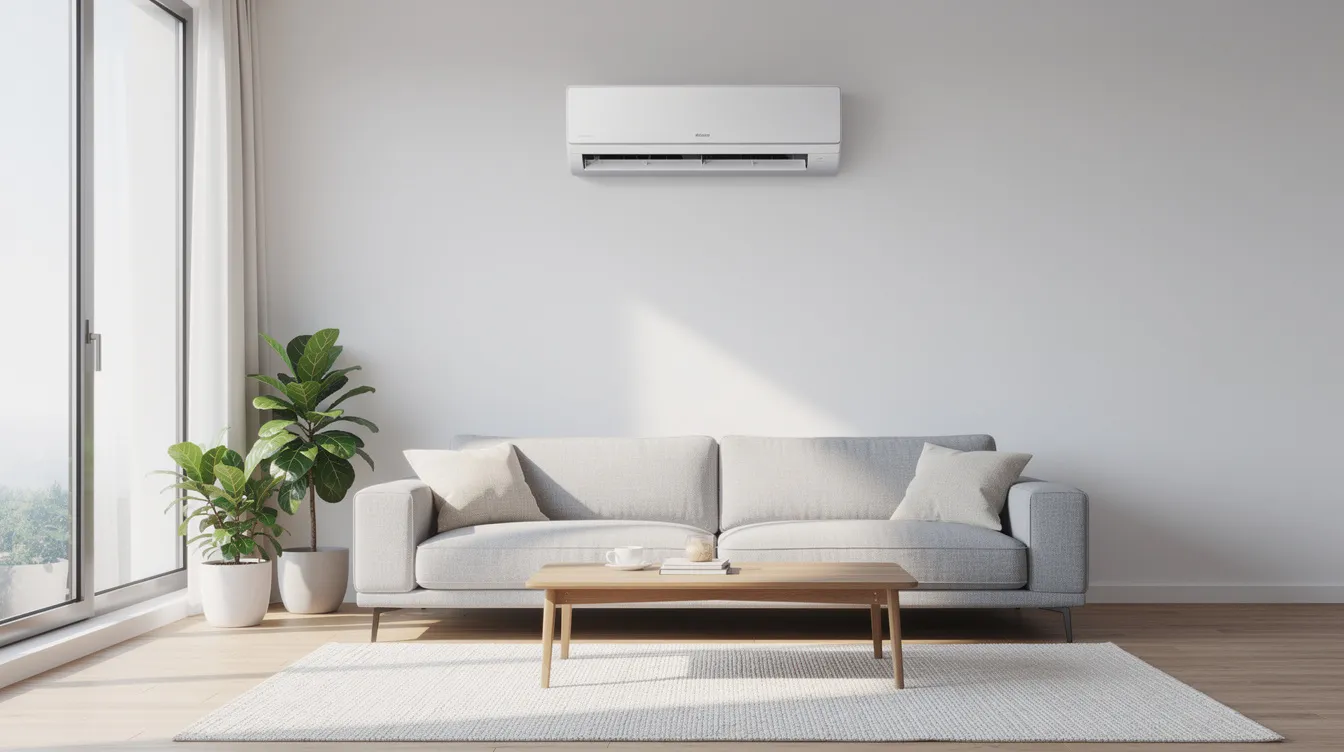
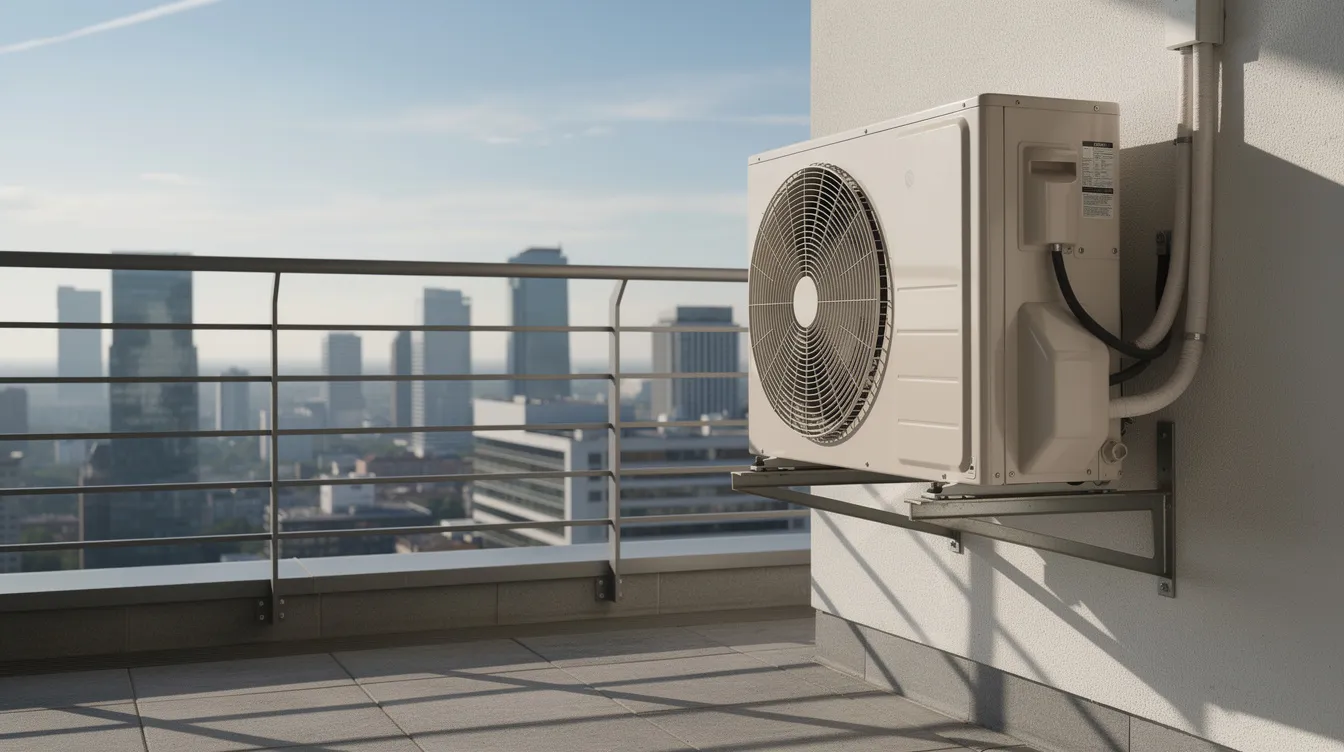
A split system air conditioner has two main components: an indoor evaporator unit and an outdoor condenser. The compressor—located in the outdoor unit—is the heart of the system, responsible for circulating refrigerant and transferring heat.
In a traditional non-inverter air conditioner, the compressor uses a fixed-speed compressor that runs at full power when cooling or heating is needed, then shuts off completely once the desired temperature is reached. This constant on/off cycling creates noticeable temperature fluctuations and wastes energy through repeated start-up surges.
An inverter air conditioner changes this entirely. The inverter compressor can run at variable speeds, adjusting its output to match the room’s actual cooling or heating demand. Instead of slamming between full power and off, the system ramps up quickly to reach the setpoint, then slows down to maintain stable indoor temperatures effectively. Inverter ACs adjust compressor speed for consistent temperature, and this smoother operation also means quieter performance and less mechanical stress.
Most modern split inverter air conditioners also offer reverse-cycle operation—both heating and cooling from one unit—which is particularly useful during Cape Town’s cooler winter mornings.
For a deeper technical explanation, see Daikin’s inverter technology page.
How Does an Aircon Inverter Work?
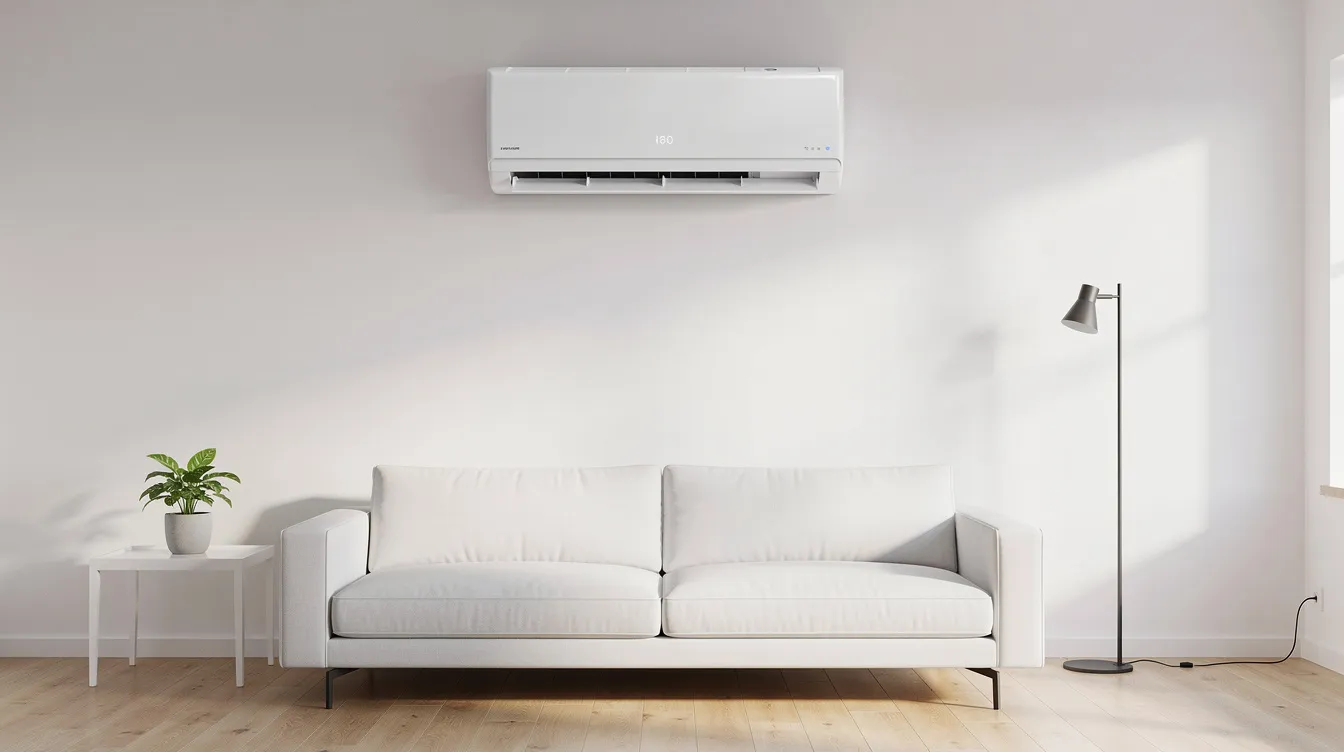
An aircon inverter works by converting incoming alternating current (AC) power into direct current (DC), then using power electronics to generate variable-frequency AC output to drive the compressor motor. By controlling this frequency, the system can precisely adjust compressor speed—from high output for fast cooling down to gentle, low-speed operation for temperature maintenance.
Here is the process in simple terms:
- Temperature sensors inside the indoor unit continuously monitor the room’s temperature and feed data to the control board.
- The control board calculates how much cooling or heating is needed.
- The inverter adjusts the compressor speed accordingly—running faster when there is a big gap between the current and desired temperature and slower as the room approaches the setpoint.
- Smart sensors in inverter air conditioners allow continuous adjustment of motor speed, keeping the room steady without aggressive cycling.
This approach reduces energy spikes from frequent compressor restarts, which is a major source of wasted electricity in fixed-speed systems. Inverter technology reduces energy spikes from frequent compressor restarts, resulting in smoother, more efficient operation.
Consider a practical example: on a summer afternoon in a 20 m² Cape Town bedroom, an inverter unit might draw close to its rated capacity to pull the room down to 23°C, then reduce to perhaps a third of that power to hold the temperature steady—quietly and efficiently.
What Is an Air Conditioner Inverter?
An air conditioner inverter is the electronic control module that manages the compressor motor speed. Think of it as both the brain and the throttle of the system—it decides how fast the compressor needs to run and adjusts output smoothly rather than switching between on and off.
You might see different terms used interchangeably in brochures and spec sheets: inverter air conditioner, inverter AC, inverter air conditioning system, or variable-speed technology. They all describe the same core principle.
Key points about the inverter’s role:
- Controls compressor speed based on real-time temperature readings
- Reduces harsh stop/start cycling
- Optimises energy use by matching output to actual demand
- Contains advanced electronic components that require professional diagnosis if faults occur
Why Should We Use an Inverter Air Conditioner?
There are several compelling reasons homeowners and businesses in Cape Town choose inverter air conditioning:
Inverter technology maintains a precise and steady room temperature without discomfort. Because the compressor modulates its speed, you avoid the hot and cold swings common with non-inverter units. This matters especially in bedrooms, home offices, and spaces where you spend many hours.
On the energy side, inverter ACs can save up to 30% more energy than non-inverter units under typical conditions, according to manufacturer data. In some usage scenarios, savings can be even higher. The system operates efficiently at partial loads, which is how most air conditioners actually run for the majority of their operating time.
Inverter ACs operate quietly due to smooth compressor operation, making them ideal for bedrooms, nurseries, and professional environments where noise levels matter.
Many inverter models are reverse-cycle, serving as a heating and cooling air conditioner suitable for year-round use in the Western Cape’s Mediterranean climate—warm dry summers and cool wet winters.
Key benefits of inverter air conditioners:
- More consistent cooling and heating with fewer temperature fluctuations
- Potential energy savings of 30–50% compared to non-inverter models under frequent use
- Quieter operation at reduced compressor speeds
- Reverse-cycle heating and cooling capability
- Good sleep mode performance for overnight comfort
- Reduced mechanical wear, leading to longer lifespan
- Better part-load efficiency for spaces used many hours daily
Not sure which inverter air conditioner is right for your home or business? Call Coolflow Air Conditioning on 078 772 0455 or email info@coolflowaircon.co.za for professional sizing and installation advice in Cape Town and the Western Cape.

Main Benefits of Inverter Air Conditioners (With Comparison Table)
The benefits of inverter air conditioners become most apparent in spaces where the unit runs for several hours per day. In busy offices, living rooms used daily, or bedrooms used every night, the difference in comfort and energy costs compared to non-inverter air conditioners can be significant.
Inverter ACs operate 30% to 50% more efficiently than non-inverter models under sustained use. They maintain stable temperatures, improving energy efficiency, and continuous operation reduces wear and tear on the compressor motor.
| Feature | Inverter Air Conditioner | Non-Inverter Air Conditioner |
|---|---|---|
| Compressor operation | Variable speed (ramps up and down) | Fixed speed (either full on or off) |
| Temperature control | More consistent, fewer swings | Noticeable fluctuations |
| Start/stop cycles | Reduced, runs mostly at low speed | Frequent on/off startups |
| Energy use | Often more efficient under frequent use | Can use more energy when cycled often |
| Noise | Often quieter at low speeds | Can be louder during start-up and full power |
| Purchase price | Usually higher upfront | Usually lower upfront |
| Best use case | Spaces used many hours per day | Occasional or backup use |
| Actual performance depends on the brand, model, correct sizing, and installation quality. A poorly installed inverter system can underperform a well-installed non-inverter unit. |
Air Conditioners: Inverter Technology Explained
Many consumers search for “air conditioners with inverters” when looking for inverter-based models. The underlying technology involves several coordinated systems working together to optimize air conditioning energy efficiency.
Here are the main elements:
- Power control: the inverter board converts and regulates electricity to vary compressor motor speed
- Compressor modulation: the compressor ramps up for fast cooling or heating, then reduces to maintain setpoint
- Sensor feedback: temperature and sometimes humidity sensors continuously report conditions to the control board
- Soft start: the system avoids the heavy current spike associated with fixed-speed compressor starts
- Electronic expansion valve (in some models): adjusts refrigerant flow to match the compressor’s variable output
These components work together to deliver efficient cooling and heating while minimizing energy waste compared to basic on/off air conditioning units.
Inverter vs Non-Inverter Air Conditioner
This is the core buying decision for most shoppers: inverter vs. non-inverter air conditioner. The fundamental difference is compressor operation—variable speed versus fixed speed.
In terms of energy use, inverter ACs use 30–50% less electricity than non-inverter models when running for extended periods. During light usage—a guest room used a few times a month—the price difference in running costs narrows because neither type runs enough to accumulate large savings.
For temperature stability and comfort in bedrooms and offices, inverter systems clearly excel. Non-inverter ACs create noticeable temperature fluctuations as the compressor cycles on and off, which can disrupt sleep and reduce productivity. Inverter ACs produce less noise due to smoother operation, which is another advantage for noise-sensitive environments.
The initial purchase price for inverter units is typically higher—inverter ACs can be 20% to 35% more expensive initially. However, long-term savings on electricity and fewer repairs from reduced mechanical stress can offset this over time. Inverter ACs typically have a longer lifespan than non-inverter models, with well-maintained units lasting 10 to 15 years or more.
Non-inverter air conditioners can still be suitable for rooms used infrequently—guest bedrooms, occasional boardrooms, or backup cooling scenarios.
When to choose an inverter vs. a non-inverter:
- Choose inverter for rooms used daily or for many hours (bedrooms, living rooms, offices)
- Choose inverter if electricity costs are a priority and you want lower energy bills
- Consider non-inverter for rarely used spaces with tight upfront budgets
- Always ensure correct sizing regardless of type—this matters as much as inverter vs non-inverter
Does an Inverter Air Conditioner Save Electricity?
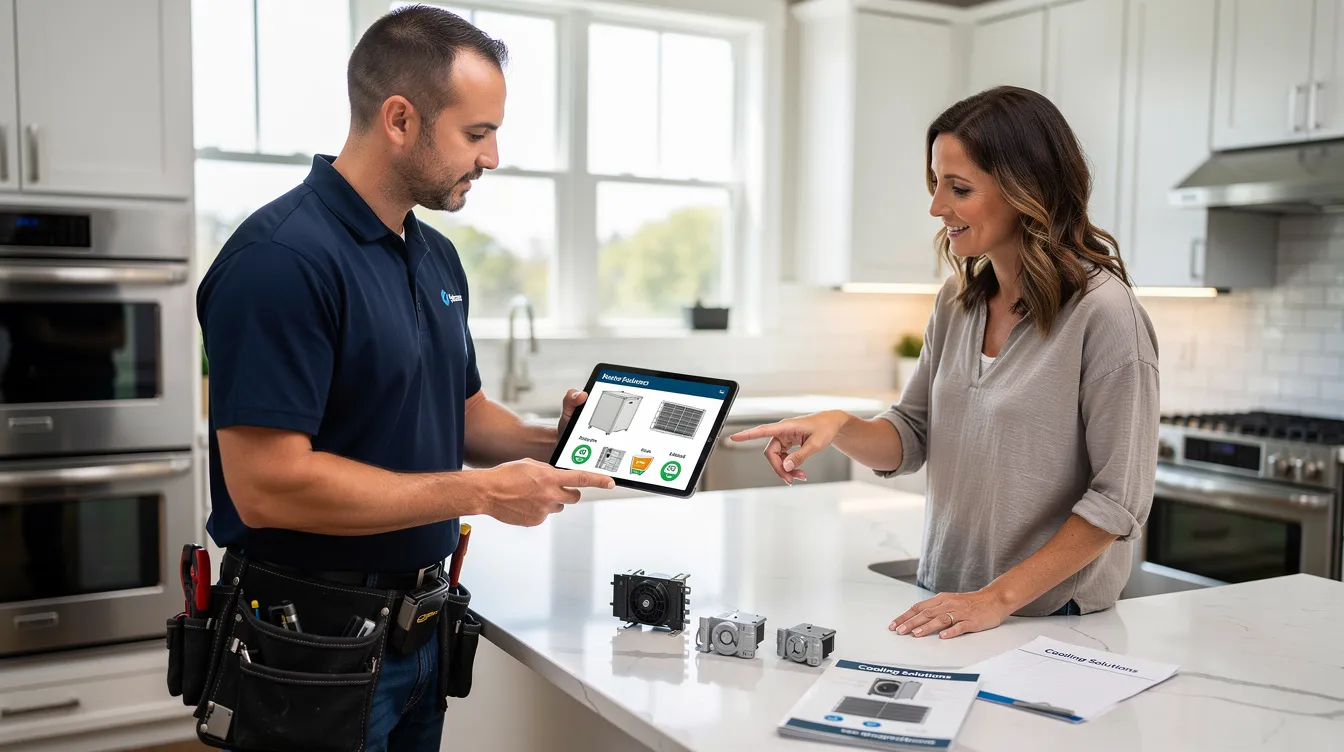
Yes, an inverter air conditioner can save electricity compared to a similar non-inverter unit—but actual savings vary based on several factors. Manufacturer claims range widely: inverter ACs can save up to 50% more energy in some scenarios, with some sources citing savings of up to 70% more energy under optimal conditions.
These figures typically come from laboratory testing. Real-world savings depend on:
- Unit efficiency rating (SEER/EER)—inverter ACs typically have higher SEER ratings for better efficiency
- Correct BTU sizing relative to room heat load
- Set temperature (23–24 °C uses less energy than 18 °C)
- Room insulation, window size and sun exposure
- Number of occupants and internal heat sources
- Outdoor temperature and Cape Town’s seasonal climate
- Installation quality and correct refrigerant charge
- Ongoing maintenance and filter cleaning
It is important to compare official energy labels and manufacturer specifications when shopping. The difference between maximum rated input on the nameplate and typical operating consumption at partial load can be substantial—an inverter unit rarely runs at full rated power once the room is comfortable.
Why Inverter Air Conditioners Can Be More Energy Efficient
Most air conditioners in real life spend the majority of their running time below maximum capacity. This is where inverter ACs excel. Inverter air conditioners tend to perform better during lower-load periods for cooling, because the compressor modulates to match the actual demand rather than wasting energy cycling on and off.
Think of it like driving a car: maintaining a steady speed on an open road uses far less fuel than constantly braking and accelerating in traffic. An inverter aircon avoids overshooting the desired temperature and then undershooting when the compressor switches off, which wastes energy in both directions.
Reasons inverter air conditioners can be more energy efficient:
- Part-load operation matches output to actual demand
- Avoiding full-power restarts eliminates current spikes
- Maintaining consistent temperatures prevents energy waste from overshoot/undershoot
- The system operates efficiently in heating mode during winter as well
Does an Inverter Air Conditioner Run All the Time?
A common concern is that inverter air conditioners “run all the time” and therefore use more electricity. In reality, while the compressor may continue operating for extended periods, it runs at very low speed once the setpoint is reached—not at full power.
- Continuous low-speed operation typically uses less energy than repeatedly stopping and restarting at full load
- The unit will still cycle down or turn off under very low demand conditions
- This operating pattern is normal and by design—not a fault
- Running at low speed also means lower noise and less wear on components
Are Inverter Air Conditioners Quieter?
Inverter systems can often achieve quieter operation because they run the compressor and fans at lower speeds once the room approaches the set temperature. This is especially valuable in bedrooms, baby rooms, small flats, and home offices.
However, not every inverter model is quieter than every non-inverter model. Noise also depends on brand, unit design, mounting quality, and outdoor unit placement.
Practical tips to minimize noise:
- Choose a model with low published dB ratings for both indoor and outdoor units
- Position the outdoor unit away from bedroom windows and neighbouring properties
- Ensure proper vibration isolation during installation
- Keep the unit well maintained—worn components can increase noise over time

Does Inverter Aircon Cool a Room Faster?
Inverter compressors run at higher capacity initially for rapid cooling or heating when first switched on. Many models can briefly exceed their nominal rating to pull the room temperature down (or up) faster, then smoothly reduce speed as the desired temperature is approached.
That said, actual cooling speed depends primarily on correct BTU sizing, room heat load, insulation, and airflow—not solely on inverter technology. An undersized inverter unit will still struggle in an oversized room.
Even where initial cooling speed is similar between technologies, comfort is typically higher with an inverter air conditioner because of the smooth, steady follow-through rather than aggressive cycling.
Inverter Air Conditioner Electricity Consumption & Running Costs
Understanding inverter air conditioner electricity consumption requires looking beyond the nameplate power rating. The main factors affecting your actual electricity usage include:
- Cooling or heating capacity (BTU/kW)
- Efficiency rating (EER/SEER)
- Set temperature and mode (cool, heat, auto or fan)
- Hours of use per day and per month
- Climate and seasonal variation in Cape Town and the Western Cape
To roughly estimate monthly running cost, multiply the unit’s average kW draw at typical operating conditions by the hours of use and your local electricity tariff per kWh. Since an inverter unit spends most of its time at partial load, actual draw is often well below the maximum rated input.
What influences your inverter air conditioner’s running costs?
- Hours of daily use—more hours means greater total consumption but also greater relative savings versus non-inverter
- Temperature setting – every degree lower costs more electricity
- Room heat load—large windows, poor insulation and direct sun increase demand
- Unit efficiency – higher SEER-rated models cost less to run per unit of cooling
- Maintenance condition—dirty filters, blocked coils and low refrigerant increase consumption
- Correct sizing—oversized units short-cycle; undersized units run constantly
- Installation quality—proper pipe insulation, refrigerant charge and airflow matter
- Electricity tariff—municipal and Eskom rates vary
Is an Inverter Air Conditioner Worth It?
For spaces used regularly—bedrooms every night, home offices during working hours, living rooms in the afternoons, or businesses with long trading hours—an inverter air conditioner is typically worth the higher initial cost. The combination of lower energy bills, better comfort, quieter operation, and reduced mechanical wear adds up over years of use.
When an inverter air conditioner makes the most sense:
- Bedrooms used every night where quiet, stable temperatures matter
- Home offices and study rooms used daily
- Living rooms and open-plan areas used for several hours
- Restaurants, guest houses, consulting rooms and retail spaces with long operating hours
- Properties where both heating and cooling are needed year-round
- Households prioritising energy efficiency and comfort
A non-inverter system may still be acceptable for a seldom-used guest room or a space with very limited budget, but you trade away efficiency and comfort benefits.
Advantages of Inverter Air Conditioning
The main inverter air conditioner benefits for homeowners and businesses include:
- More stable, comfortable indoor temperatures with consistent cooling and heating
- Reduced stop/start compressor cycling and fewer energy spikes
- Potentially lower electricity use and lower energy bills under frequent operation
- Often quieter operation at low compressor speeds and reduced noise levels
- Better performance at partial load conditions—where units spend most of their time
- Heating and cooling from the same unit on reverse-cycle models
- Continuous operation reduces wear on components, extending lifespan—inverter ACs reduce wear on components, extending their lifespan
- Good suitability for bedrooms, living areas, home offices and commercial spaces
- A good sleep mode that maintains comfort without aggressive cycling
- Fast cooling capability through initial high-output operation
Disadvantages and Considerations of Inverter Air Conditioning
A balanced view is important. Here are the realistic considerations:
- Higher initial inverter air conditioner price—inverter ACs can be 20% to 35% more expensive initially than entry-level non-inverter units
- More complex electronics (PCB, sensors, inverter board) that may cost more to repair depending on the fault and model
- Need for qualified technicians to diagnose inverter compressor and electronic issues – DIY repair attempts risk further damage
- Installation quality is critical: poor sizing, incorrect refrigerant charge or bad pipework can erase the expected efficiency advantage
- In very infrequently used spaces, the long-term savings may not recoup the price difference quickly
Reputable brands with good warranty support and parts availability in South Africa significantly reduce these risks. Professional installation by experienced technicians is essential.
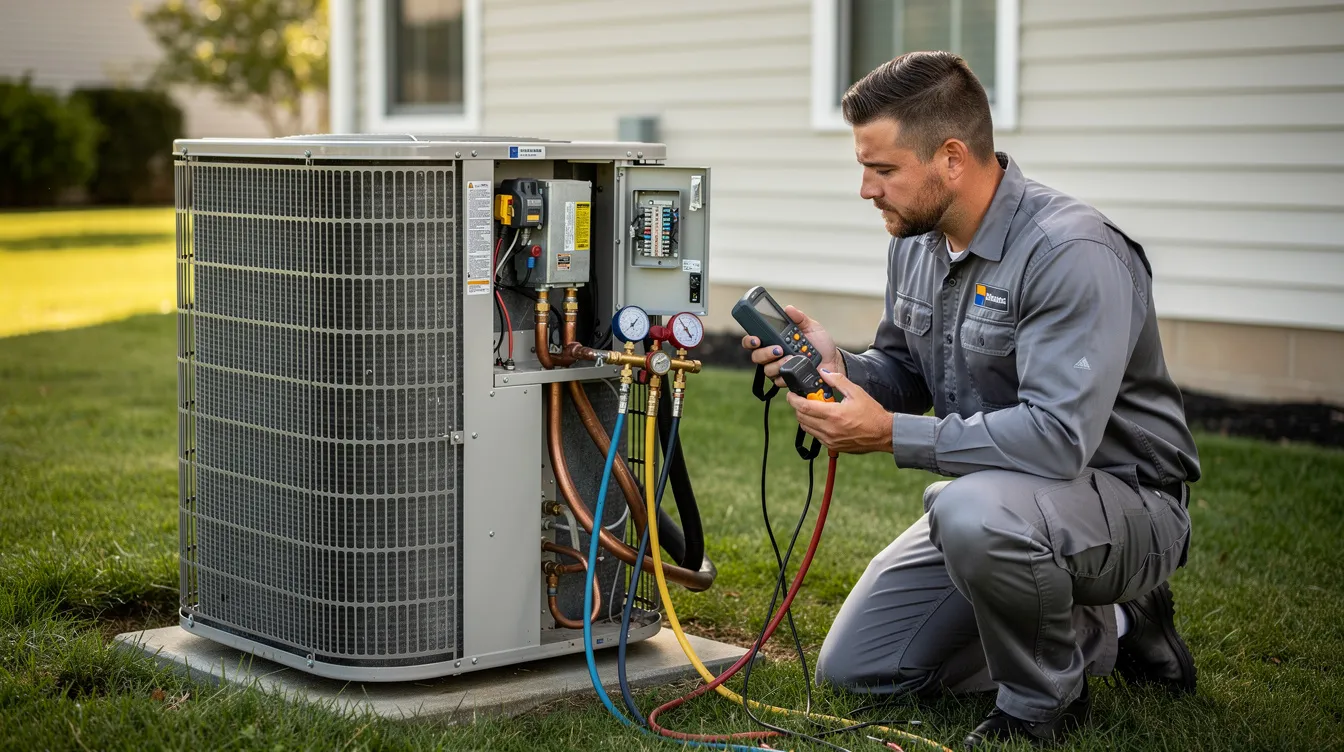
Choosing the Correct Inverter Air Conditioner Size (BTU and Heat Load)
Choosing the right BTU capacity is critical. An oversized unit will short-cycle, waste energy, and control humidity poorly. An undersized unit will run constantly without reaching the desired temperature.
Key factors in choosing the right inverter AC size:
- Room floor area and ceiling height (standard is 2.4 m; higher ceilings need more capacity)
- Insulation quality and building materials
- Window size, type and orientation—north- and west-facing windows in Cape Town receive significant solar gain and may need 10–20% more capacity
- Number of occupants and equipment loads (computers, lighting)
- Whether the space is open-plan or divided
- Usage pattern—a bedroom at night has different demands from an office running all day
Professional heat-load calculations take all these factors into account. Avoid purchasing based purely on price and BTU number without considering your specific room conditions.
Which BTU Inverter Air Conditioner Do I Need?
General guidance on typical BTU ranges (subject to heat-load assessment):
- 9 000 BTU: may suit small bedrooms or home offices, typically around 12–18 m², depending on conditions
- 12 000 BTU: often suitable for medium bedrooms or small lounges, roughly 18–25 m²
- 18 000 BTU: commonly used for larger lounges or open-plan living areas, approximately 25–35 m²
- 24 000 BTU: for large open-plan areas or commercial rooms, approximately 35–50 m², subject to proper assessment
These ranges are indicative only. Glass areas, building orientation, insulation, and ceiling height can significantly change the requirement. Contact Coolflow for a proper assessment before purchasing.
Best Inverter Air Conditioner for Your Home or Office
There is no single “best inverter air conditioner”—suitability depends on your specific space, budget, and requirements. When comparing models, consider:
- Correct BTU capacity for your room and heat load
- Energy efficiency ratings and the generation of inverter technology used
- Noise levels for both indoor and outdoor units (check manufacturer dB ratings)
- Heating and cooling capability
- Air filtration and indoor air quality features
- Smart controls, Wi-Fi connectivity or app control
- Warranty terms, parts availability and brand support in South Africa
- Aesthetics and indoor unit design for modern interiors
Experienced technicians can help narrow choices based on your property and needs, ensuring you get the best prices for models that actually suit your situation.
Popular Inverter Air Conditioner Brands
Several reputable brands operate in the South African market. Here is a brief overview:
- Samsung: wide range of residential and commercial inverter models with smart connectivity features
- Daikin: strong reputation for energy efficiency and inverter compressor technology; well-established stock and support in South Africa
- Midea: competitive pricing across a broad range of capacities
- Alliance: popular in the South African residential market with good value models
- LG: known for quiet operation and smart home integration
- Carrier: long history in commercial air conditioning with reliable inverter systems
- Mitsubishi Electric: premium efficiency and build quality, particularly in commercial applications
Coolflow typically recommends brands based on reliability, local parts availability, and suitability for Cape Town’s coastal conditions, where corrosion resistance matters.
Inverter Air Conditioning for Cape Town Homes
Cape Town’s Mediterranean climate—warm, dry summers with temperatures reaching the mid-to-high 20s and cool, wet winters—makes a residential inverter air conditioner a practical year-round investment. The city records approximately 342 cooling degree-days and 625 heating degree-days annually, meaning both cooling and heating demand are real.
Sun-exposed lounges with large north- or west-facing windows can heat up significantly on summer afternoons. Apartments and townhouses with limited cross-ventilation benefit from efficient cooling. Freestanding houses near the coast need outdoor units that can handle salt air—anti-corrosive coatings and good airflow around the condenser are important.
For bedrooms, position the indoor unit to avoid blowing directly onto the bed. In living areas, mounting above a doorway or on a wall opposite seating works well. If you are planning a renovation or new build in coastal suburbs like Bantry Bay, consider air conditioner installation costs and coastal conditions early so that pipe routes and electrical supplies can be designed into the project.
Homeowners planning renovations or considering their first air conditioner should speak to Coolflow for a Cape Town home assessment.
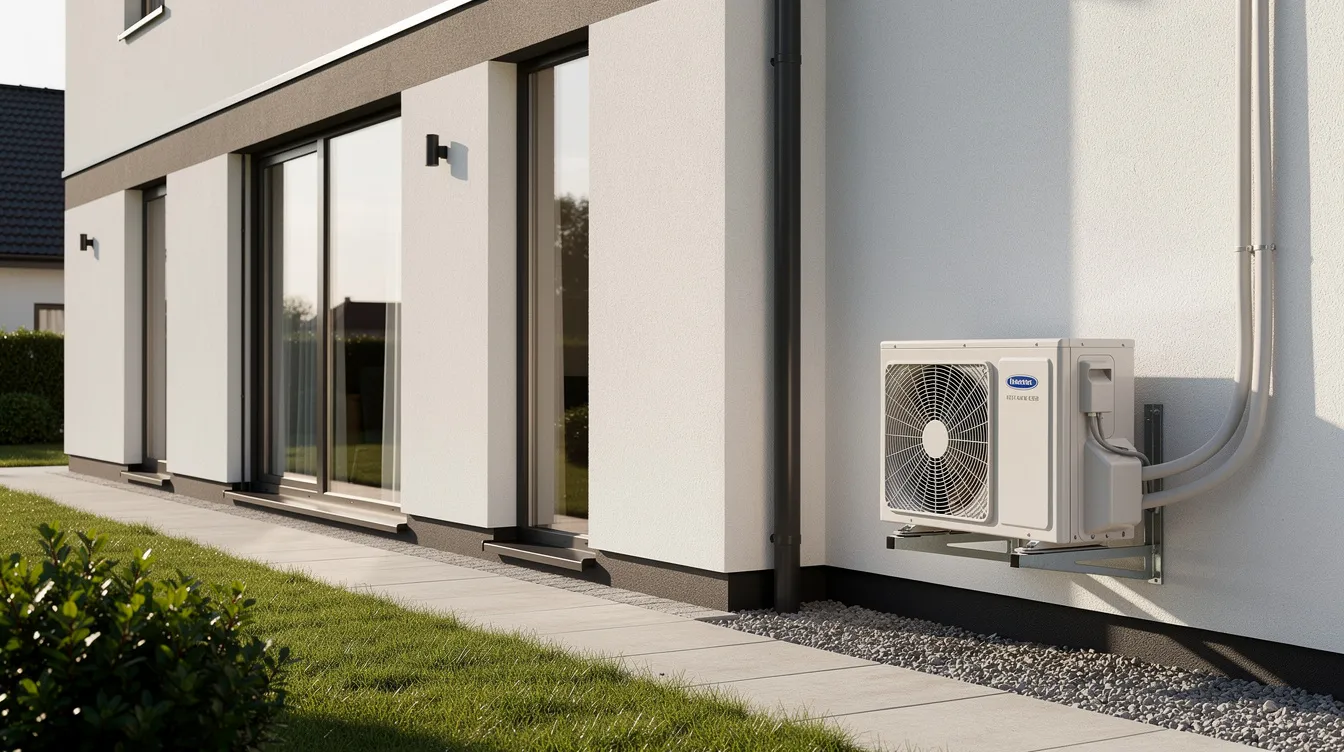
Inverter Air Conditioning for Western Cape Businesses
Commercial inverter air conditioning can benefit a range of Western Cape businesses by providing stable indoor temperatures for staff and customers while controlling energy costs over long operating hours, especially when supported by local AC repair and installation services in Parow.
Typical Western Cape business applications for inverter aircon, including reliable AC repair and installation in St. Helena Bay:
- Offices and co-working spaces needing consistent, quiet comfort during working hours in areas such as Vredenburg and surrounding West Coast towns
- Retail stores and showrooms where customer experience matters
- Restaurants and cafés requiring quiet, effective temperature control
- Guest houses and B&Bs where room comfort directly affects reviews and bookings
- Reception areas and consulting rooms in medical and professional practices
- Commercial premises with extended operating hours where savings accumulate quickly
For larger commercial projects, correct design may involve multiple indoor units, zoning, or higher-capacity systems—best handled by experienced installers who understand the space and usage patterns.
Professional Inverter Aircon Installation
Professional installation is not optional if you want your inverter system to deliver on its efficiency and comfort promises. Correct installation directly affects performance, energy consumption, reliability, and noise levels, and understanding air conditioner installation costs and savings tips in Kuils River can help you budget wisely.
Key installation steps include the following:
- Site survey and heat-load sizing
- Selecting optimal indoor and outdoor unit positions for airflow and access
- Running copper refrigerant lines and drain pipes neatly and with proper insulation
- Ensuring good airflow around both indoor and outdoor units
- Electrical connection and safety compliance
- Vacuuming the refrigerant lines to remove moisture and contaminants
- Leak testing, commissioning and user instructions
A poorly installed inverter system can short-cycle, leak refrigerant, run inefficiently, and break down prematurely—erasing the benefits you paid a premium for.
Coolflow Air Conditioning handles both residential and commercial inverter air conditioner installation across Cape Town and the Western Cape.
Need professional inverter aircon installation? Call 078 772 0455 or email info@coolflowaircon.co.za for expert advice and a quotation.
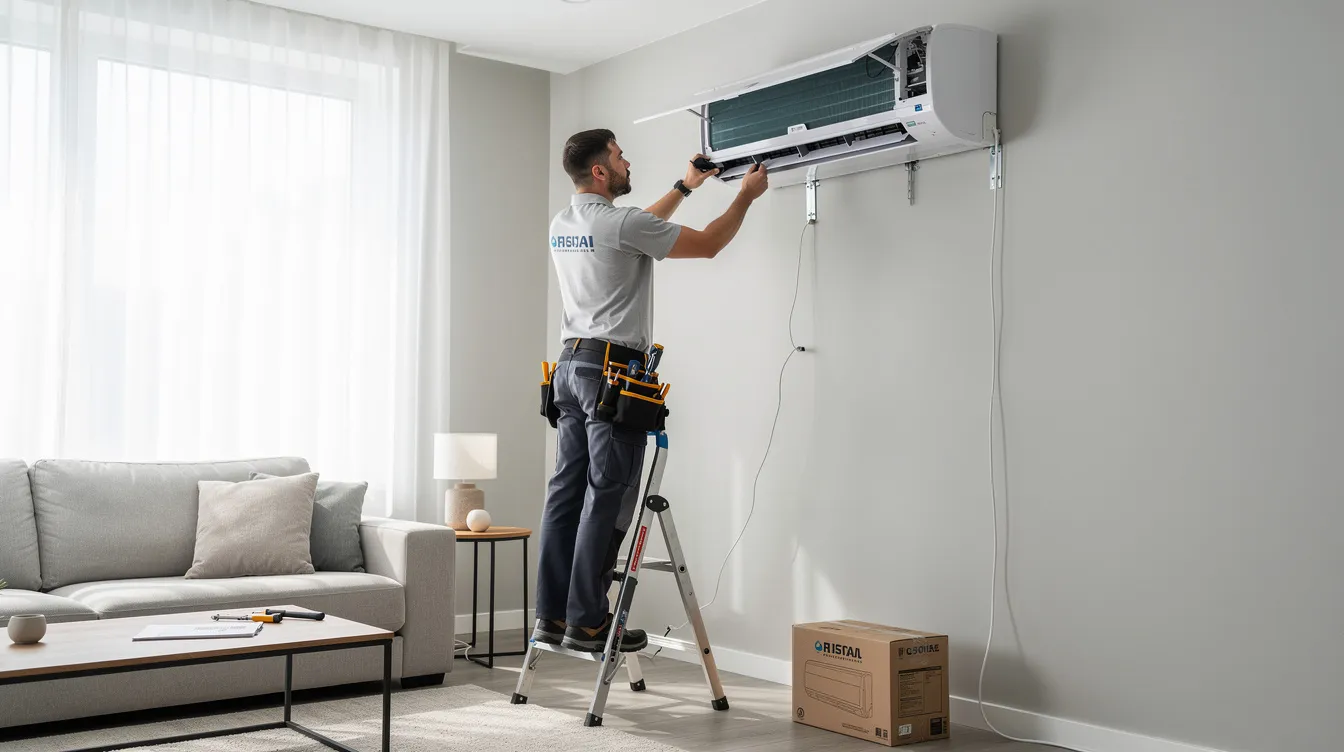
Maintaining an Inverter Air Conditioner
Regular maintenance is essential to keep an inverter air conditioner running efficiently, quietly, and reliably.
Simple homeowner tasks:
- Clean or rinse indoor unit filters every two to four weeks during heavy use
- Keep indoor unit grills and casings dust-free
- Ensure the outdoor unit is clear of leaves, plastic bags and obstructions
- Avoid blocking indoor airflow with furniture or curtains
Professional servicing tasks:
- Deep cleaning evaporator and condenser coils and the blower
- Checking refrigerant pressures and inspecting for leaks
- Inspecting the PCB, sensors and electrical components
- Flushing and clearing condensate drains
- Verifying system performance and temperature splits
Regular servicing helps maintain energy efficiency and can extend equipment lifespan. Inverter ACs typically last 15 years or more with proper maintenance, while neglected units degrade faster.
How Often Should an Inverter Air Conditioner Be Serviced?
General guidelines:
- Residential inverter air conditioner used regularly: at least once a year, potentially twice in dusty or coastal environments like Cape Town’s beachfront suburbs
- Commercial inverter systems: typically twice a year or more, depending on usage hours and environment
Cape Town’s coastal air, dust, and pollution can make more frequent servicing advisable, especially for outdoor units exposed to salt spray. Manufacturer recommendations and actual usage patterns should guide your exact intervals. Schedule preventative servicing before peak summer and winter seasons to avoid breakdowns when you need the system most.
Common Inverter Air Conditioner Problems and Troubleshooting
Typical issues homeowners and businesses encounter include:
- Not cooling or heating effectively – may indicate low refrigerant, dirty coils or incorrect settings
- Weak airflow from the indoor unit – often caused by clogged filters or a faulty blower
- Water leaking from the indoor unit – usually a blocked condensate drain
- Strange noises or vibrations—can indicate loose components, worn fan bearings or mounting issues
- Error codes on the indoor unit display – require manufacturer-specific diagnosis
- Unit switching off unexpectedly – possible electrical fault, sensor issue or overheating protection
- Temperature sensor faults or inconsistent readings
- PCB or electronics failures are more complex in inverter systems and require professional repair
- Refrigerant leaks and low gas levels
Inverter systems contain sophisticated electronic components. Incorrect DIY repair attempts can cause further damage and may void your warranty. Always use qualified technicians for diagnosis and repair.
Does an Inverter Air Conditioner Need Regassing?
Both inverter and non-inverter air conditioners use sealed refrigerant systems. Under normal operation, they should not require routine “regassing” or top-ups.
If refrigerant is low, it almost always means there is a leak somewhere in the system. Simply topping up without finding and repairing the leak is a temporary fix that can damage the compressor over time.
Signs your aircon may have a refrigerant problem:
- The unit runs but does not cool or heat effectively
- Ice forming on the indoor evaporator coils
- The outdoor unit making unusual hissing or bubbling sounds
- Significantly higher electricity usage without explanation
If you suspect a gas issue, contact qualified technicians for proper leak detection and repair rather than a quick regas.
FAQ: Inverter Air Conditioners and Aircon Inverter Technology
What is an inverter air conditioner?
An inverter air conditioner uses a variable-speed compressor that adjusts its speed based on cooling or heating demand. Unlike fixed-speed units, it modulates output for consistent temperatures, better energy efficiency, and quieter operation.
Why should we use an inverter air conditioner?
Inverter systems offer improved comfort through stable temperatures, potential long-term savings on electricity, quieter operation, and heating and cooling from one unit. They are particularly worthwhile in Cape Town and Western Cape homes and businesses where aircons run for several hours daily.
How does an aircon inverter work?
An aircon inverter converts AC power to DC, then back to variable-frequency AC to control compressor speed. Temperature sensors continuously feed data to the control board, which adjusts the compressor to match the room’s actual demand—avoiding wasteful on/off cycling.
Does an inverter air conditioner save electricity?
Yes, under frequent use. Inverter ACs can save up to 70% more energy than non-inverter units under optimal conditions. Real savings depend on usage hours, sizing, settings, insulation, and maintenance. Typical ranges cited are 30–50% less electricity than comparable non-inverter models.
Is inverter aircon cheaper to run?
While inverter aircon costs more upfront, it is often cheaper to run over time in spaces used many hours per day. The longer and more frequently you use the system, the greater the cumulative savings compared to non-inverter energy costs.
What is the difference between inverter and non-inverter air conditioning?
The core difference is compressor operation. Inverter units use a variable speed compressor that ramps up and down. Non-inverter units use a fixed-speed compressor that is either fully on or completely off, leading to temperature fluctuations, energy spikes, and more noise during cycling.
Are inverter air conditioners worth the extra money?
In frequently used spaces—bedrooms, living areas, offices, and commercial premises—yes. The long-term savings, comfort, and reduced wear typically justify the higher initial cost. For seldom-used rooms, a non-inverter may suffice.
Does an inverter air conditioner run continuously?
The compressor may operate for extended periods at low speed, but this is normal and generally uses less energy than frequent full-power restarts. The unit cycles down or stops under very low demand.
Are inverter air conditioners quieter?
Generally, yes. Reduced compressor speed means lower noise levels during steady operation. However, noise also depends on brand, model, unit design, and installation quality. Always check the published dB ratings.
Does inverter aircon cool faster?
Many inverter models can initially run above nominal capacity for fast cooling, then reduce speed as the desired temperature is approached. However, cooling speed also depends heavily on correct BTU sizing, room insulation, and heat load.
How much electricity does an inverter air conditioner use?
Consumption varies with capacity, efficiency rating, and runtime. Check nameplate data and energy labels. A unit’s actual operating draw is typically well below its maximum rating because it spends most time at partial load.
What BTU inverter air conditioner do I need?
Common capacities range from 9 000 BTU for small rooms to 24 000 BTU for large or open-plan spaces. Always factor in ceiling height, insulation, window orientation, and occupants. A professional assessment provides the most accurate sizing.
Are inverter air conditioners good for bedrooms?
Yes. Stable temperatures, quieter operation, and efficient overnight running make inverter systems well suited for bedrooms. Correct capacity selection and a quiet indoor unit enhance the experience further.
Are inverter air conditioners suitable for offices?
Absolutely. Offices benefit from consistent temperatures for staff productivity, low noise levels for concentration, and energy-efficient operation over long working days. Commercial inverter systems are widely used across Western Cape business settings.
Can an inverter air conditioner heat a room?
Most modern inverter split systems are reverse-cycle, using a heat pump process to provide both heating and cooling. Heat pump heating is generally more efficient than portable aircons or electric bar heaters, making it a cost-effective winter solution.
How long does an inverter air conditioner last?
Inverter ACs typically last around 10 to 15 years with proper maintenance, quality installation, and a reputable brand. Some units exceed this with diligent servicing. Regular maintenance is the single biggest factor in longevity.
How often should an inverter air conditioner be serviced?
At least once a year for residential units, and twice or more for commercial systems. Coastal or dusty environments like parts of Cape Town may require more frequent attention.
Do inverter air conditioners need regassing?
Not routinely. Refrigerant is in a sealed system. Low gas typically indicates a leak that needs professional repair, not simply a top-up.
Are inverter air conditioners more expensive to repair?
Some electronic or inverter compressor faults can cost more than basic non-inverter repairs due to the complexity of the components. Good brands with available parts and regular maintenance reduce the likelihood and cost of repairs. Fewer repairs are needed overall because of reduced mechanical stress. Professional diagnosis is essential.
Which inverter air conditioner is best?
The best choice depends on your room size, budget, efficiency requirements, noise tolerance, brand support, and installation quality. There is no universally “best” brand or model. Contact Coolflow for tailored recommendations based on your Cape Town or Western Cape property.
Conclusion: Why We Should Use an Inverter Air Conditioner
An inverter air conditioner offers a fundamentally different approach to indoor comfort. By adjusting compressor speed to match actual demand, these systems deliver what fixed-speed units cannot: stable temperatures, efficient part-load operation, and reduced mechanical wear.
Key takeaways:
- More controlled, variable-speed compressor operation tailored to real-time conditions
- Stable indoor comfort with fewer temperature swings
- Potential for significantly better energy efficiency and long-term savings under frequent use
- Reduced stop/start cycling for quieter operation and less component wear
- Heating and cooling flexibility in one system for year-round comfort in the Western Cape
While inverter units cost more upfront than many non-inverter models, they are typically the smarter choice for bedrooms, living rooms, home offices, and businesses that use air conditioning regularly. For many homes and businesses in Cape Town and the Western Cape, an inverter air conditioner is worth serious consideration as a comfortable, modern, and energy-efficient solution.
Considering an inverter air conditioner for your home or business in Cape Town or the Western Cape? Coolflow Air Conditioning can assist with professional sizing, installation, servicing, and repairs. Call 078 772 0455 or email info@coolflowaircon.co.za for advice or a quotation.