
Ultimate Guide to Home Air Conditioning Systems: Types, Costs & Expert Tips

Comprehensive Guide to Home Air Conditioning Systems
Introduction: Home Air Conditioning Systems & Why They Matter
South African homeowners face extremes that make home air conditioning systems more than a luxury. Gauteng summers push well past 30°C, KwaZulu-Natal brings relentless humidity, and Highveld winters can dip close to freezing overnight. A well-chosen home air conditioner keeps indoor spaces comfortable year-round while helping manage electricity bills and improving the air your family breathes.
If you have been researching which air conditioner to buy, what types of air conditioning systems suit your home, or how much a residential air conditioning setup actually costs to run, this guide was written for you. It covers every stage of the decision—from comparing residential air conditioners and understanding how air conditioning works to choosing the correct BTU size, selecting an energy-efficient inverter unit, navigating professional installation, and knowing when maintenance, repairs, or replacement are due.
One important point worth understanding from the outset: air conditioning systems don’t create cold air. They move heat out of your home using refrigerant, effectively removing heat and humidity from inside the house so that the remaining air feels cooler and drier.
Throughout this guide, we reference real South African conditions, pricing, and efficiency data so you can make confident, informed decisions. And if you need personalized advice at any point, Coolflow Air Conditioning is here to help with professional installation, servicing, repairs, and regassing.
Need help choosing the right air conditioning system for your home? Call 078 772 0455 or email info@coolflowaircon.co.za for expert guidance.
Here is what this guide will answer:
- Which type of home air conditioner suits your space and budget?
- How do you calculate the right BTU or kW capacity for each room?
- What makes inverter air conditioners more energy efficient than fixed-speed units?
- What does professional air conditioning installation involve, and what does it cost?
- How often should a residential air conditioner be serviced?
- When should you repair, regas, or replace an aging unit?
- How can you reduce air conditioner running costs without sacrificing comfort?
How Home Air Conditioning Works & Main System Types
How Air Conditioning Works
Air conditioning uses a closed-loop refrigeration cycle to function. Four core components make it possible: the compressor, the condenser coil, the expansion valve, and the evaporator coil.
Inside your home, liquid refrigerant absorbs thermal energy in the indoor evaporator coil. As it absorbs heat from the indoor air, the refrigerant changes from liquid to gas. The compressor then squeezes this gaseous refrigerant under high pressure, raising its temperature further. The hot, pressurized gas flows to the outdoor unit, where heat is released from the refrigerant in the outdoor condenser coil into the outside air. Finally, an expansion valve reduces pressure and cools the refrigerant before it re-enters the indoor unit, and the cycle repeats.
Fans blow indoor air across the cold evaporator coil, thermostats regulate the target temperature, and filters trap dust and allergens before the conditioned air circulates back into your rooms.
Cooling-Only vs Reverse-Cycle Systems
Cooling-only units handle summer heat but offer nothing in winter. Reverse-cycle air conditioners can provide both heating and cooling by reversing the refrigerant flow, effectively turning the outdoor unit into the evaporator and the indoor unit into the condenser. For South African homeowners on the Highveld or inland plateau, a reverse-cycle system can replace costly electric heaters during cold months, making it a versatile component of a home’s broader HVAC systems.
Types of Home Air Conditioning Systems
South African homeowners typically choose from five main categories:
- Split system air conditioners—the most popular residential option, with an indoor wall-mounted unit connected to an outdoor condenser via refrigerant lines.
- Multi-split systems—one outdoor unit serving multiple indoor units, ideal for homes needing zoned climate control across several rooms.
- Ducted air conditioning systems—ducted systems cool homes using a network of ducts and vents, offering a discreet whole-home solution. Ducted packaged systems distribute air using centralized ductwork, though they require space for ductwork and can lose energy through ducts if poorly insulated.
- Window units – self-contained systems suitable for cooling single rooms or small spaces. Window air conditioners are generally noisy and less attractive but remain a budget entry point.
- Portable air conditioners – Portable air conditioners vent hot air outside through a flexible hose, offering flexible cooling options for renters or temporary situations.
Floor-standing air conditioners are also suitable for larger spaces where wall mounting is impractical.
Popular brands recognized across South Africa include Samsung, LG, Midea, Daikin, Carrier, and Mitsubishi Electric. Coolflow Air Conditioning installs and services leading-brand residential air conditioning systems to help homeowners find the ideal unit for their needs.
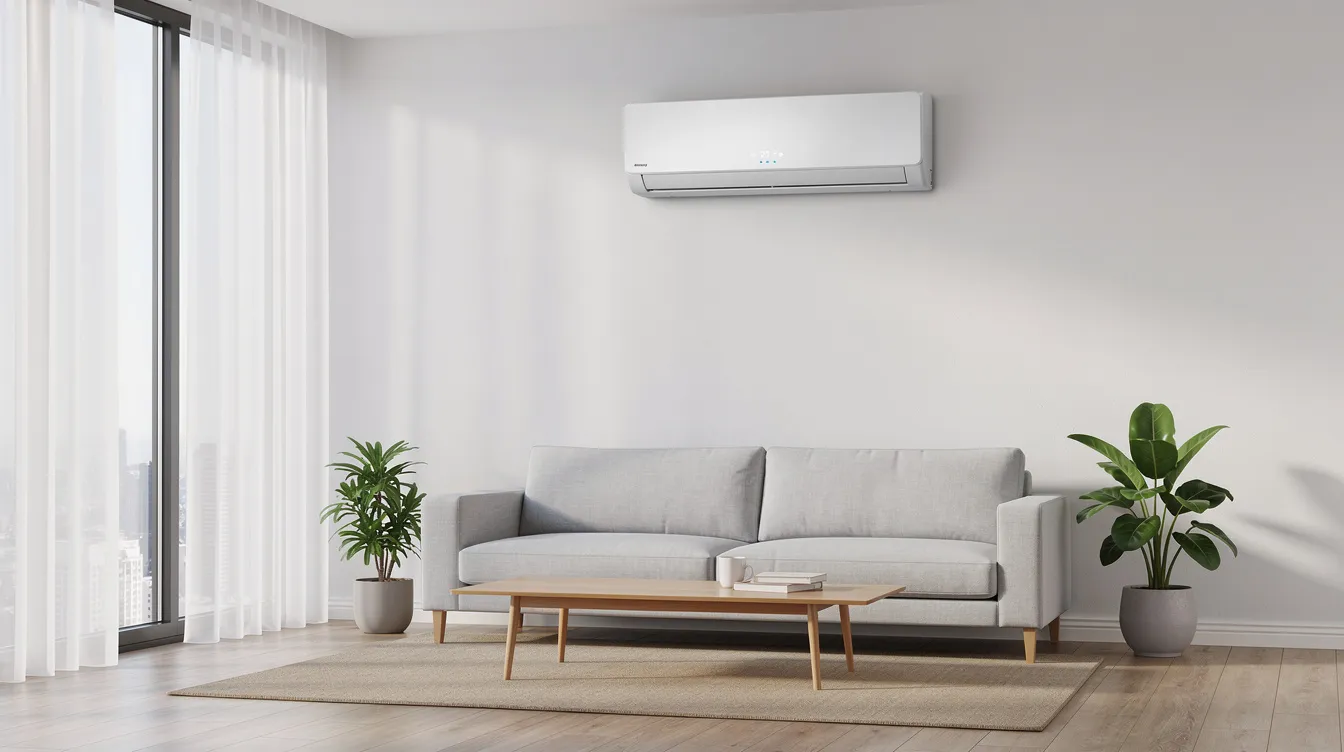
Split System, Wall-Mounted & Portable Home Air Conditioners
Wall-mounted air conditioners are popular for residential use across South Africa, and the split system configuration is the reason why. Split systems feature separate indoor and outdoor units connected by refrigerant lines, with copper piping, electrical cabling, and a condensate drain linking the two. This separation keeps compressor noise outdoors while delivering quiet, efficient airflow indoors.
Ductless mini-splits are used for homes without existing ductwork or for zone-controlled heating and cooling, making them a practical choice for retrofitting older properties that were never designed with ducting in mind. Zoned climate control allows cooling of only actively used rooms, so you are not paying to condition a guest bedroom no one is sleeping in.
Pros of split systems:
- High energy efficiency, especially inverter models
- Quiet indoor operation
- Clean wall-mounted appearance
- Available in cooling-only or reverse-cycle (heating and cooling)
- Wide range of capacities from small bedrooms to large lounges
Cons to consider:
- Professional installation required (piping, electrical, brackets)
- Outdoor condenser needs adequate ventilation and access
- Higher upfront cost than window or portable units
When does a portable unit make sense?
If you are renting a flat and cannot drill walls or need temporary cooling for a holiday home, portable air conditioners offer flexible cooling without permanent installation. However, they are louder, less efficient, and generally not built for continuous daily use over many years. For any homeowner planning to stay in a property long-term, a split air conditioner is the more effective and reliable investment.
For professional split-system air conditioner installation and wall-mounted air conditioner installation, speak to the Coolflow team about options that suit your home’s layout and budget.
Inverter vs Non-Inverter Air Conditioners
Inverter air conditioners adjust compressor speed for efficiency rather than cycling fully on and off. A variable-speed compressor ramps up when a room is warm and slows down once the set temperature is reached, maintaining a stable, comfortable environment with minimal power fluctuation. Non-inverter air conditioners operate at a fixed speed—they run at full capacity until the thermostat triggers a complete shutdown, then restart when the temperature drifts.
The practical difference is significant. Inverter air conditioners provide more consistent temperature control, run quieter at lower speeds, and draw less electricity over time. Inverter units can save up to 30% on energy costs compared to fixed-speed equivalents when used for extended or daily periods. Over an 8–10 year lifespan, those savings add up considerably, especially given South Africa’s steep electricity tariffs. Non-inverter units are generally cheaper to purchase initially, which appeals to tight budgets, but higher running costs often erode that saving within a few years.
Quick comparison:
- Purchase price: Non-inverter is lower upfront; inverter costs more but pays back through electricity savings
- Energy efficiency: Inverter units use 30–50% less electricity during sustained operation
- Comfort: Inverter delivers smoother temperature with fewer hot-cold swings
- Noise: Inverter units are quieter, particularly at low-speed cruise
- Running costs: Inverter wins convincingly for daily or overnight use
Many modern energy-efficient air conditioning systems now use R-410A or newer lower-GWP refrigerants like R-32. Manufacturers such as Daikin and Samsung offer extensive range options with inverter technology and updated refrigerant types designed for lower environmental impact.
If you run your air conditioner regularly—overnight in bedrooms or through the day in a home office—prioritize an energy-efficient inverter air conditioner. Coolflow can advise on the best model for your home and handle inverter air conditioner installation from start to finish.
Choosing the Right Home Air Conditioner: Sizing, BTU & Energy-Efficient Options
Getting the air conditioner size right is one of the most consequential decisions a homeowner makes. An undersized unit will run constantly without reaching a comfortable temperature, driving up electricity bills and wearing out the compressor prematurely. An oversized unit short-cycles—cooling too fast, switching off, then restarting—which wastes energy and leaves humidity levels uncomfortably high. Proper sizing of air conditioning units is essential for efficiency and comfort.
Cooling capacity is measured in British Thermal Units (BTU) or kilowatts (kW). One kW equals approximately 3,412 BTU/h. When you shop air conditioners online or in-store, you will see both figures listed.
Factors that determine the right capacity:
- Room floor area in square metres
- Ceiling height (standard sizing assumes 2.4 m; higher ceilings need more capacity)
- Insulation quality (roof, walls, windows)
- Window size, direction and glazing type—north- or west-facing glass increases heat load
- Sun exposure and shading
- Number of occupants
- Heat-generating appliances (computers, kitchen equipment)
- Whether doors to adjacent rooms stay open or closed
General BTU guidelines for South African rooms:
| Room Size | Typical BTU Range | Approximate kW | Common Use |
|---|---|---|---|
| 10–15 m² | 9,000 BTU | ~2.6 kW | Small bedroom or study |
| 16–25 m² | 12,000 BTU | ~3.5 kW | Medium bedroom, small lounge |
| 26–35 m² | 18,000 BTU | ~5.3 kW | Larger lounge or dining area |
| 36–50 m² | 24,000 BTU | ~7.0 kW | Open-plan living space |
| These are baseline figures. A room with poor insulation, large glass doors, or strong afternoon sun exposure may need 10–20% more capacity. Air conditioning units vary by brand and features, so comparing specifications at the same BTU level is important. |
Noise levels should be considered when selecting air conditioning units for bedrooms—look for indoor units rated below 30 dB(A) for quiet overnight operation. Decibel (dB) ratings indicate noise levels of air conditioning units and are published on most product specification sheets.
Questions to ask before buying:
- What is the room’s exact floor area and ceiling height?
- Does the room get direct afternoon sun?
- Is there ceiling or wall insulation?
- Will doors to other rooms stay open or closed?
- Do you need cooling only, or heating and cooling?
- How many hours per day will the unit typically run?
Professional aircon installers refine these estimates with an on-site assessment, accounting for construction details that online calculators cannot see. For personalized advice on air conditioner BTU, energy efficiency, and running cost estimates, call 078 772 0455 or email info@coolflowaircon.co.za.
How Room Size & House Design Affect Air Conditioner Capacity
The actual dimensions of a room—length, width, and especially height—directly determine the volume of air that needs conditioning. A 25 m² room with a 3 m ceiling contains 25% more air than the same footprint at 2.4 m, so the air conditioner must work harder to achieve the same temperature.
Older South African homes with face-brick walls, single-glazed steel windows, and minimal roof insulation consistently require higher BTU ratings than modern, well-insulated builds. Large glass sliding doors, common in Gauteng and KZN homes for garden access, act as heat highways on sunny afternoons, adding substantially to the cooling load.
For multi-room cooling, homeowners have several options. Multiple split systems give independent control per room but require separate outdoor units (or a multi-split arrangement with one outdoor condenser serving several indoor units). Ducted HVAC systems offer whole-home distribution through concealed vents, but installation is more complex and costly. The right approach depends on budget, house layout, whether your property is exposed to harsh coastal conditions such as Bantry Bay, and how many rooms need climate control simultaneously. For a detailed breakdown of air conditioner installation costs in Bantry Bay, consider how property type, system size, and installation complexity affect pricing.
If you are planning renovations or building a new home, consider air conditioning early so that piping routes, electrical supply, and drainage can be concealed neatly within walls and ceilings. Retrofitting is always possible, but planning ahead saves time, money, and aesthetic compromise.
For an accurate capacity assessment tailored to your home, a visit from professional aircon installers is the most reliable path. Coolflow’s team can evaluate your space, layout, and exposure before recommending air conditioner installation services matched to your specific requirements, including dedicated support for AC repair and installation in St. Helena Bay and nearby coastal communities.
Energy Efficiency, Electricity Consumption & Running Costs
Calculating running costs is important when choosing an air conditioner, and several variables affect your monthly electricity bill:
- Energy efficiency rating: Energy efficiency ratings such as SEER indicate lower electricity consumption over time. Units carrying South Africa’s Energy Efficiency The label shows the appliance’s efficiency class. Look for the highest rating your budget allows.
- Compressor type: Inverter units draw significantly less power during sustained operation than fixed-speed models.
- Thermostat setting: Every degree below 23°C increases energy consumption noticeably.
- Hours of use: Running an air conditioner 12 hours versus 6 hours doubles consumption—obvious, but often overlooked.
- Maintenance condition: Dirty filters and coils can increase consumption by 5–15% according to Eskom.
Practical example: A 12,000 BTU (3.5 kW) inverter split air conditioner running in a 20 m² bedroom for roughly 8 hours overnight through summer may cost between R2.50 and R4.00 per hour at current tariffs, depending on insulation and thermostat settings. Over a 90-day summer season, choosing an energy-efficient inverter model over a non-inverter equivalent could save R1,350 to R1,800 in electricity—money that quickly offsets the higher purchase price.
Top ways to cut your air conditioning electricity bill:
- Set the thermostat to 23–24°C rather than pushing it to 18°C
- Keep doors and windows closed while the unit is running
- Use curtains, blinds or exterior shade to reduce solar heat gain
- Clean or replace air conditioner filters every few weeks
- Schedule annual professional air conditioner maintenance to keep coils and components operating at peak efficiency
- Run the unit on timer or sleep mode overnight
Filtration options improve air quality by reducing allergens like dust and pollen, but clean filters also maintain airflow—a clogged filter forces the compressor to work harder for the same cooling output.
Coolflow Air Conditioning helps homeowners optimize performance and minimize running costs through professional aircon servicing that keeps every component in peak condition, with dedicated teams handling AC repair and installation in Parow and surrounding areas.
Installation, Maintenance, Repairs & When to Replace Your Air Conditioner
This section is the practical lifecycle guide: from the day your new air conditioning system is installed through years of ongoing support, maintenance, troubleshooting, and the eventual decision to repair or replace.
Proper installation affects the performance of air conditioning systems significantly. An incorrectly charged system, a poorly placed outdoor unit, or sloppy electrical work will compromise efficiency, shorten lifespan, and may void the manufacturer’s warranty. Regular servicing protects your investment and maintains healthy indoor air quality. And when something does go wrong, knowing whether to repair or replace saves you both time and money.
Homeowners should not attempt DIY refrigerant work or electrical modifications on air conditioning systems. These tasks require licensed professionals with the right tools, training, and safety knowledge.
Ready to arrange professional air conditioning installation or a residential air conditioner service? Call 078 772 0455 or email info@coolflowaircon.co.za to speak with the Coolflow team.
What Happens During Professional Air Conditioning Installation?
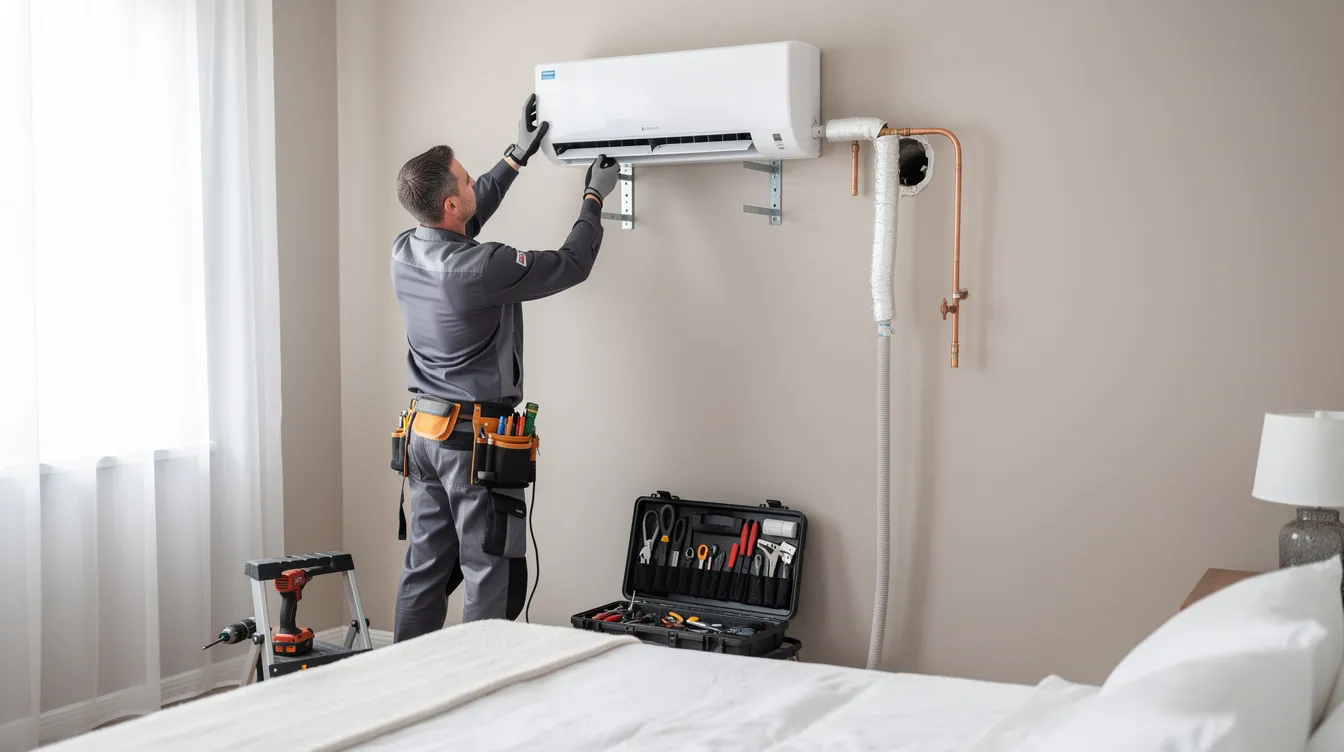
Here is what to expect when a professional team installs a wall-mounted split system air conditioner in your home:
- Site survey and confirmation—The installer confirms the chosen air conditioner size, assesses wall structure, checks electrical supply, and agrees on indoor and outdoor unit positions with the homeowner.
- Drilling and mounting – A hole is drilled through the wall for piping and drainage. The indoor mounting plate is fixed securely, and the indoor unit is hung in place.
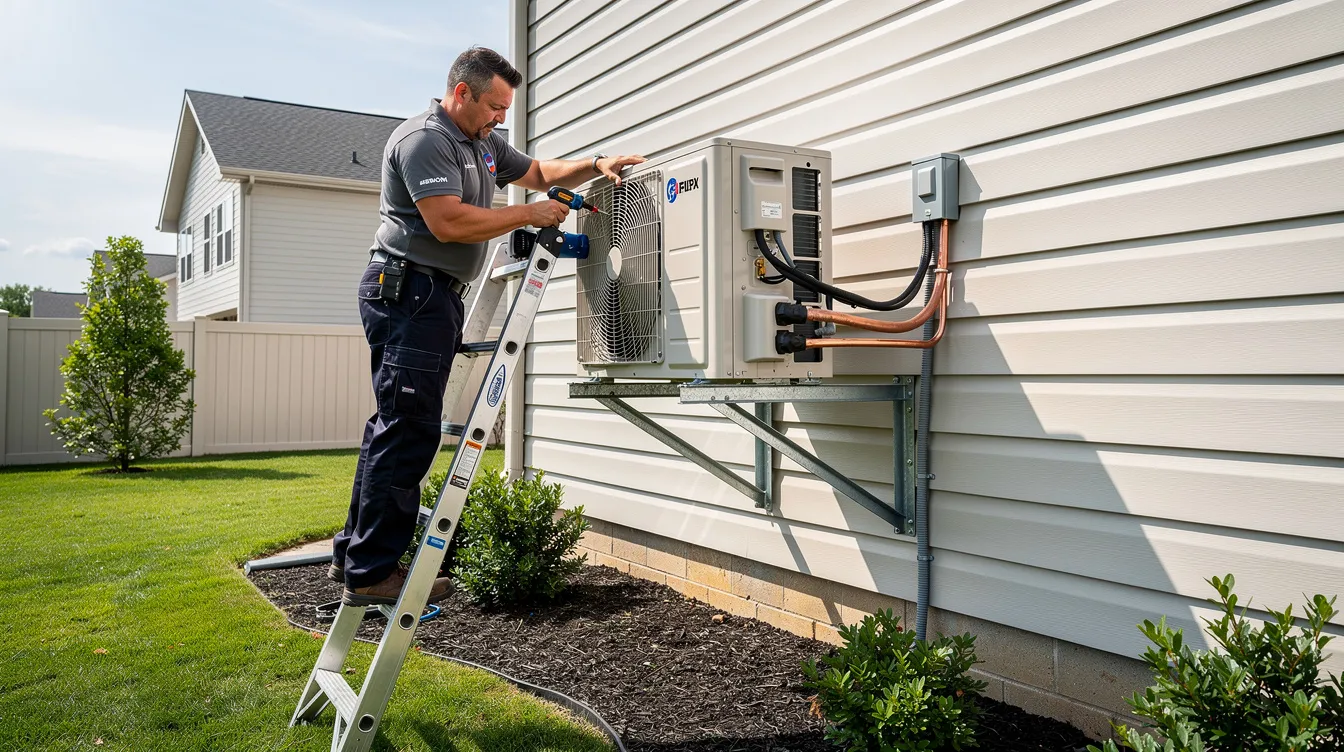
- Outdoor unit positioning – The condenser is placed on a wall bracket or ground stand in a location with adequate airflow, reasonable noise distance from bedrooms or neighbors, and easy access for future servicing. Protection from direct sun is preferred where practical.
- Piping and wiring—Copper refrigerant pipes, the electrical cable, and the condensate drain are routed between the indoor and outdoor units. Neat trunking or concealed routing keeps the installation tidy.
- Pressure testing and vacuuming—The refrigerant lines are pressure-tested for leaks and then vacuumed to remove moisture and air before refrigerant is released into the system.
- Commissioning – The unit is powered on, the refrigerant charge is verified, airflow and temperature differentials are checked, and the homeowner is shown how to use the remote control and perform basic filter maintenance.
A standard back-to-back installation—where the indoor and outdoor units share the same wall—typically takes 1 to 2 hours of labor. Complex routes, multi-story buildings, or concealed piping runs may extend this to a full day.
Installation costs range from R1,650 to R3,850 depending on the difficulty of the job, the size of the unit, and the amount of additional piping or electrical work required. A standard installation requires 1 meter of piping and brackets; longer pipe runs or special brackets increase the price. Homeowners in areas like Kuils River can manage their budget more effectively by following affordable tips to reduce air conditioner installation costs while still insisting on professional workmanship.
It is worth noting that companies like AC Direct have over 150 installation teams across South Africa, which speaks to the scale of demand for professional residential installation nationwide.
Why does professional installation matter? Correct refrigerant charge, proper pipe insulation, compliant electrical connections, and correct condenser placement all determine whether your system runs efficiently for a decade or develops problems within months. Always insist on qualified technicians who work to manufacturer specifications and relevant South African electrical standards.
Coolflow Air Conditioning takes pride in quality workmanship, tidy finishes, and ongoing support after every air conditioning installation. The installation process is supported by proper commissioning standards and follow-up assistance, and the team ensures your system is commissioned correctly and that you understand how to operate it from day one.
Air Conditioner Maintenance & How Often to Service Your Air Conditioner
There is a clear difference between what homeowners can do themselves and what requires a professional:
Homeowner tasks (monthly):
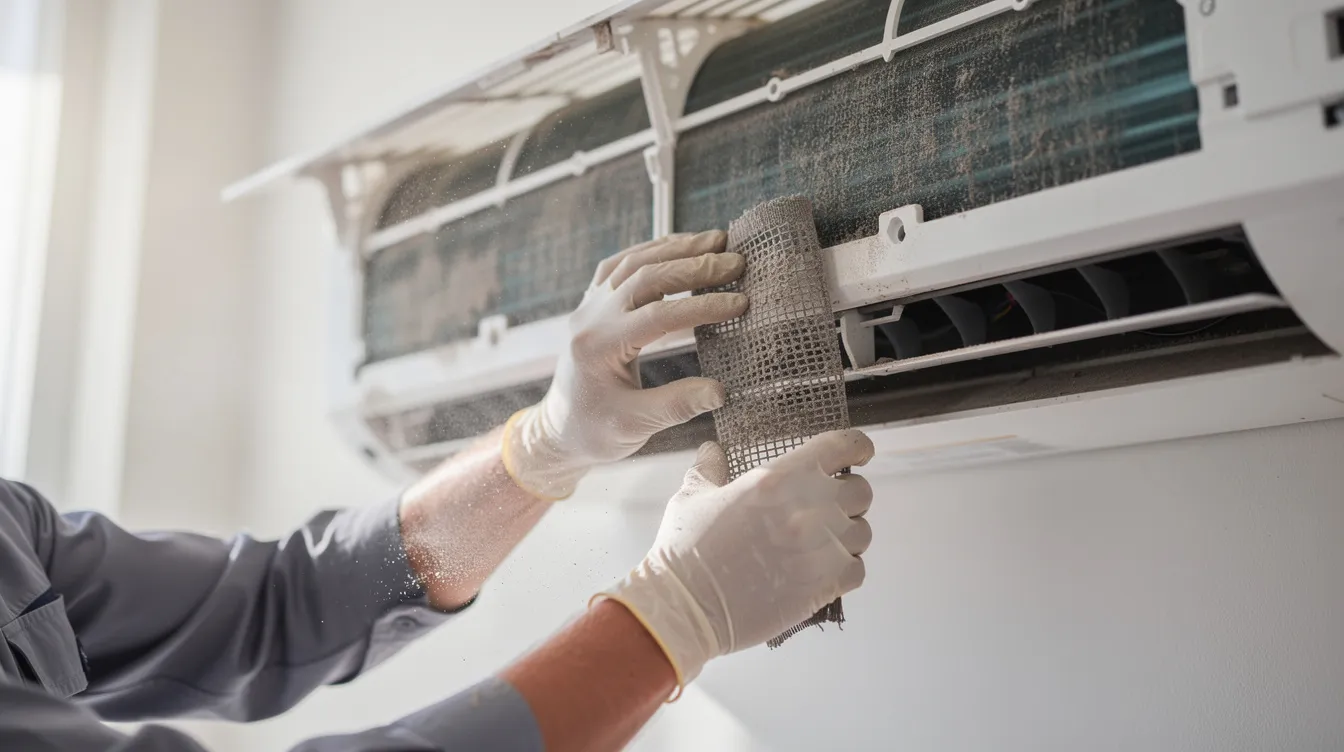
- Clean or rinse the indoor unit’s air filter—most filters slide out easily
- Clear leaves, grass clippings and debris away from the outdoor condenser
- Ensure the condensate drain pipe is not blocked or dripping where it shouldn’t
- Check that furniture or curtains are not blocking the indoor unit’s airflow
Professional servicing (annually or bi-annually):
- Deep clean indoor evaporator coils and fan barrel
- Clean and inspect the outdoor condenser coil and fan
- Check refrigerant gas pressures
- Inspect and tighten electrical connections
- Flush the condensate drain
- Test thermostat accuracy and overall system performance
For homes running their aircon heavily through summer and winter, or properties in coastal environments where salt-laden air accelerates corrosion, servicing every six months is recommended. For moderate inland use, at least once a year is the minimum.
A typical Coolflow aircon service covers all the professional tasks listed above, ensuring that your system runs at peak efficiency and that small issues are caught before they become expensive repairs.
Proper air conditioner servicing also improves indoor air quality by reducing dust, mold, and bacteria buildup in filters and coils. If you have noticed musty smells when the unit starts, that is often a sign the coils and drain need professional cleaning.
Signs your aircon is overdue for servicing:
- Reduced cooling performance even at low thermostat settings
- Unpleasant or musty odours when the unit runs
- Water dripping from the indoor unit
- Higher-than-usual electricity bills
- Unusual noises from either the indoor or outdoor unit
Book preventative maintenance before peak summer heatwaves or winter cold snaps to avoid the rush. Call 078 772 0455 or email info@coolflowaircon.co.za to schedule professional air conditioner servicing.
Common Air Conditioning Problems, Regassing & Repairs
Even well-maintained air conditioners can develop faults. Here are the most common problems homeowners encounter:
- Unit running but not cooling – possible causes include low refrigerant, dirty coils, a faulty compressor or a blocked filter
- Water leaking from the indoor unit – usually a blocked condensate drain or cracked drain tray
- Ice build-up on pipes or the evaporator – often caused by restricted airflow (dirty filter), low refrigerant or a faulty fan
- Strange noises—clicking, rattling or grinding—may indicate loose parts, a failing fan motor or debris in the outdoor unit
- Bad odours – mould or bacterial growth inside the unit or drain system
- Tripping the power—electrical fault in the unit, wiring issue or overloaded circuit
- Outdoor unit not running—could be a control board fault, capacitor failure or power supply issue
When does regassing apply?
Regassing—topping up the refrigerant—is only necessary when there is a leak or a confirmed drop in gas pressure. A properly sealed system should not lose refrigerant under normal operation. Simply “topping up” without finding and repairing the leak is not a proper fix and will result in the same problem recurring. Professional aircon regas services include leak detection and repair as part of the process.
During a professional diagnostic visit, technicians check air filters, evaporator and condenser coils, fan motors, gas pressures, electrical components, thermistors, and control boards to isolate the fault accurately. Manufacturers like LG provide technical resources on refrigerant trends and common fault diagnostics that inform best-practice repair approaches.
Typical repair considerations include the following:
- Cost of replacement parts versus age of the system
- Availability of spares for older or discontinued models
- Whether the repair cost exceeds roughly 50% of a new unit’s installed price
- Whether the unit uses an obsolete refrigerant that is becoming expensive or hard to source
Switch off your air conditioner immediately and call a technician if you notice:
- A burning or acrid electrical smell
- The unit repeatedly trips the circuit breaker
- Loud mechanical grinding or banging noises
- Visible sparking or smoke from any component
If your air conditioner is running but not cooling properly, or you have noticed water leaks or unusual noises, contact Coolflow for air conditioning repairs. Call 078 772 0455 or email info@coolflowaircon.co.za to arrange an inspection and quote.
Repair vs Replacement & Typical Air Conditioner Lifespan
A well-maintained split system air conditioner in South Africa can last 10–15 years, sometimes longer. Ducted systems with good installation and regular servicing may reach 15–20 years. Window units typically manage 8–12 years, and portable units rarely exceed 5–8 years.
Coastal regions present a challenge. Salt air, moisture, and humidity accelerate corrosion of outdoor condenser coils and brackets. In areas like Durban’s beachfront or the Garden Route coast, lifespan can drop to 8–12 years if the outdoor unit is not protected with anti-corrosion coatings or marine-grade materials.
Factors that shorten lifespan:
- Poor installation (incorrect refrigerant charge, blocked airflow, sloppy wiring)
- Lack of regular servicing
- Persistently dirty filters forcing the compressor to overwork
- Corrosive coastal or industrial environments
- Continuous overloading – e.g., a unit that is too small for the room it serves
- Incorrect sizing from the start
When to repair: The system is under 8–10 years old, the fault is isolated and straightforward, parts are readily available, and the repair cost is well below 50% of a new unit’s installed price.
When to replace:
- The unit is over 10–12 years old and has had multiple breakdowns
- It uses an obsolete refrigerant like R-22 that is increasingly expensive
- Repair costs are approaching half the price of a new installation
- Energy consumption has risen significantly despite servicing
- You want to upgrade to a quieter, more energy-efficient inverter model
Upgrading from an older, power-hungry fixed-speed unit to a modern inverter air conditioner delivers immediate benefits: lower electricity bills, more consistent comfort, quieter operation, and a refrigerant that complies with current environmental regulations.
Coolflow can provide honest, transparent advice on whether repair or replacement makes better financial sense for your situation, including quotes for both options. Whether you are in a major city or need AC repair and installation in Vredenburg and surrounding West Coast towns, [contact our air conditioning team](LINK 23) for a professional assessment.
Key signs it may be time to replace your home air conditioner:
- Frequent breakdowns requiring repeated call-outs
- Cooling capacity no longer adequate despite correct maintenance
- Compressor noise has increased noticeably
- Monthly electricity costs keep climbing
- The unit uses a phased-out refrigerant
- Parts are discontinued or on extended back-order
Indoor Air Quality, FAQs & When to Call Coolflow Air Conditioning
Indoor air quality matters more than most homeowners realize. A running air conditioner circulates indoor air repeatedly, and if the filter is clogged, the coils are dirty, or the condensate drain is growing mold, that same contaminated air is pushed back into the room. Dust mites, pollen, pet dander, and mold spores accumulate inside poorly maintained systems and can aggravate allergies and respiratory conditions.
The air conditioner filter is your first line of defense. Clean or replace it regularly—ideally every two to four weeks during heavy use. Beyond the filter, professionally cleaned evaporator coils and a clear condensate drain keep the system hygienic. Reputable manufacturers like Daikin and Carrier provide detailed guidance on filter care and indoor air quality management for their products.
Maintaining healthy indoor air ties directly back to regular air conditioner maintenance and professional air-con servicing. If you have not had your system cleaned and inspected in the last 12 months, now is a good time to book a service.
Need personalized advice on your air conditioning system, or ready to request a quotation? Call 078 772 0455 or email info@coolflowaircon.co.za.
Frequently Asked Questions About Home Air Conditioning Systems
What is the best air conditioning system for a home?
For most South African homes, a wall-mounted split-system air conditioner with inverter technology offers the best balance of efficiency, comfort, quiet operation, and value. The best air conditioner for your home depends on room size, layout, insulation, budget, and whether you need heating as well as cooling. Samsung is one of the trusted brands in air conditioning, while Alliance air conditioners are energy-efficient and reliable. Other popular brands include LG, Daikin, Midea, and Carrier.
What size air conditioner do I need?
Air conditioner size depends on room area, ceiling height, insulation, sun exposure, and occupancy. A professional on-site assessment is the most accurate way to determine the correct capacity for your space.
How many BTUs do I need for my room?
As a general guide, a 10–15 m² bedroom typically needs around 9,000 BTU, a 20–25 m² lounge requires about 12,000 BTU, and a 30–40 m² open-plan area may need 18,000–24,000 BTU. Rooms with high ceilings, poor insulation, or large windows may require 10–20% more. For accurate sizing, speak to professional air conditioner installers who can assess your specific conditions.
Are inverter air conditioners more energy efficient?
Yes. Inverter air conditioners adjust compressor speed to match the cooling demand rather than cycling on and off at full power. This can reduce electricity consumption by 30–50% compared to non-inverter models during sustained use, making them significantly more energy efficient over time.
How much electricity does a home air conditioner use?
A 12,000 BTU inverter split system may cost roughly R2.50–R4.00 per hour to run under typical conditions. Actual consumption depends on the unit’s efficiency rating, thermostat setting, insulation, outdoor temperature, and how long the unit runs each day.
How often should an air conditioner be serviced?
At minimum, once a year for standard residential use. In coastal areas or where the system runs heavily through both summer and winter, every six months is advisable. Regular servicing maintains performance, extends lifespan, and protects indoor air quality.
How do I know if my air conditioner needs regassing?
If cooling performance has dropped noticeably, the unit runs continuously without reaching the set temperature, or you see ice forming on the refrigerant pipes, low gas pressure may be the cause. A qualified technician can check refrigerant levels and, if a leak is found, repair it before recharging the system.
Why is my air conditioner running but not cooling?
Common causes include a dirty filter restricting airflow, low refrigerant from a leak, a faulty compressor or capacitor, frozen evaporator coils, or a blocked condenser. Start by checking and cleaning the filter. If that does not resolve the issue, professional diagnosis is needed—contact Coolflow on 078 772 0455 for an inspection.
How long does an air conditioner normally last?
A well-maintained split system typically lasts 10–15 years. Ducted systems may reach 15–20 years. Window units average 8–12 years, and portable units around 5–8 years. Coastal conditions, poor maintenance, and incorrect sizing all shorten lifespan.
Is it better to repair or replace an old air conditioner?
If the unit is under 10 years old and the repair cost is modest, repair usually makes sense. If the unit is older than 10–12 years, uses an obsolete refrigerant, breaks down frequently, or the repair bill exceeds about 50% of a new unit’s installed price, replacement with a modern energy-efficient inverter model is likely the smarter financial decision. Coolflow can quote on both repair and replacement so you can make an informed choice.
Can one air conditioner cool multiple rooms?
A single split system is designed to condition the room where it is installed. Open-plan layouts may allow some spillover, but for reliable multi-room cooling, you need either a multi-split system (one outdoor unit, multiple indoor units) or a ducted system. Both options provide effective whole-home comfort.
What is the difference between split and ducted air conditioning?
A split system has a visible indoor unit on the wall and an outdoor condenser. It conditions individual rooms and is the most common residential choice. A ducted system hides the indoor unit in the ceiling or roof space and distributes cooled air through ducts and vents throughout the home. Ducted is more discreet and suited to whole-home climate control but costs more to install.
How much does professional air conditioning installation cost?
Installation costs range from R1,650 to R3,850 for a standard residential split system, depending on the unit size, pipe run length, and complexity of the installation. Standard installation requires 1 meter of piping and brackets. Longer pipe runs, multi-story buildings, or concealed routing will cost more. Coolflow provides detailed quotations before any work begins—contact us for air conditioning installation pricing.
Should an air conditioner be professionally installed?
Absolutely. Professional installation ensures correct refrigerant charge, leak-free connections, compliant electrical work, proper drainage, and optimal unit placement. DIY or unqualified installations risk poor performance, higher running costs, safety hazards, and voided manufacturer warranties.
A Note on South African Brands
Beyond the internationally recognized names, several brands have carved out strong reputations in the local market. Kühl air conditioners are known for durability and performance in demanding conditions. Avalanche air conditioners provide reliable climate control in South Africa and are tailored for South African climates. SnoMaster is designed for high South African temperatures. These products give customers a wider choice when browsing options across multiple variants and price points, alongside global brands available in stock from major retailers.
Final Conclusion & Strong Call to Action: Where to Shop Air Conditioners
Choosing the right home air conditioning system is a decision that affects your daily comfort, your monthly electricity bill, and the long-term value of your property. Whether you need a compact split system for a single bedroom or a multi-split setup for an entire household, the principles remain the same: size the unit correctly, choose energy-efficient inverter technology where possible, invest in professional installation, and commit to regular servicing.
Coolflow Air Conditioning ensures homeowners are supported at every stage—from selecting the ideal system and capacity to expert installation, ongoing maintenance, air conditioning repairs, aircon regassing, and honest repair-versus-replacement advice. The team is built to provide reliable, professional service that delivers lasting comfort and real value for your money.
For professional air conditioning installation, servicing, repairs, and aircon regassing, call Coolflow Air Conditioning on 078 772 0455.
Email: info@coolflowaircon.co.za
Whether you are ready to buy your first home air conditioner, need a sales consultation on the best system for your space, or have an existing unit that is not performing as it should, the Coolflow team is here to help. Easy to reach, chosen by homeowners across South Africa, and committed to workmanship you can trust—get in touch today.