Does Aircon Cost A Lot of Electricity?

Hot summers often push people to switch on the air conditioner. Cool air makes homes and offices far more comfortable. But one question always comes up. Does an aircon use too much electricity? Many worry about rising bills when the unit runs for hours. It’s a fair concern. Nobody likes surprises when opening the power account. The truth is that the cost depends on many things. The size of the unit, how often it runs, and the temperature setting all play a role. Even the way a room is built or insulated can change how much power is used. Modern systems are also much better than old ones. They cool spaces faster and need less energy. That’s why it’s worth learning what really affects electricity use. When it comes to airconditioning in Cape Town, the story is not as simple as people may think.
How Air Conditioning Uses Electricity
Air conditioners cool a space by transferring heat outside. They use a compressor, fans, and coolant to do this. These parts need electricity to run. The amount of power depends on the unit’s size and type. Bigger units use more energy. Smaller ones use less. For example, a wall-mounted split unit for a bedroom uses less power than a large system for an office.
Moreover, aircons have a power rating, usually in kilowatts (kW). This tells you how much electricity they use per hour. A typical home aircon might use 1 to 2 kW per hour. If electricity costs 2 rand per kW, running it for an hour costs 2 to 4 rand. Sounds simple, right? But other factors can change this.
What Affects Aircon Electricity Costs?
Several things decide how much electricity airconditioning in Cape Town uses. Let’s look at the main ones.
Unit Size and Capacity
Bigger aircons cool larger spaces but use more power. A unit that’s too big for a room wastes energy. Similarly, a unit too small works harder and uses extra electricity. Choosing the right size is key. For example, a professional aircon installation in Cape Town ensures the unit matches the room’s needs, saving energy.
Usage Time
How long the aircon runs matters a lot. Running it all day uses more power than a few hours. Turning it off when not needed helps. For instance, switching it off when leaving the house cuts costs.
Temperature Settings
Setting the aircon to a very low temperature makes it work harder. A setting of 22-24°C is comfy and saves energy. Every degree lower can increase costs by 5-10%. So, avoid cranking it to 16°C.
Insulation and Room Conditions
Poorly insulated rooms let cool air escape. This forces the aircon to run longer. Sealing windows and doors helps. Also, rooms with lots of sunlight get hotter, making the aircon work more. Curtains or blinds can reduce this.
Unit Efficiency
Modern aircons are more energy-efficient. They have ratings like A or A+++ for efficiency. Older units often use more power. Upgrading to a newer model can lower bills over time.

Energy-Saving Features in Modern Aircons
Today’s aircons come with features to cut electricity use. Let’s explore some common ones.
Inverter Technology
Inverter aircons adjust their speed to maintain the set temperature. Non-inverter units turn on and off, using more power. Inverter models save up to 30-50% on electricity. They’re popular for airconditioning in Cape Town because they’re efficient.
Smart Thermostats
Smart thermostats let you control the aircon remotely. You can turn it off from your phone when away. Some even learn your habits and adjust settings to save energy. This keeps costs down.
Eco Modes
Many aircons have an eco mode. This setting reduces power use while still cooling the room. It’s great for saving electricity during mild weather.
Timers and Sleep Modes
Timers let you set the aircon to turn off after a few hours. Sleep modes adjust the temperature at night for comfort and savings. These features prevent the unit from running unnecessarily.
Tips to Lower Aircon Electricity Costs
Want to keep your home cool without high bills? Here are practical tips for using airconditioning in Cape Town smartly.
Maintain Your Aircon Regularly
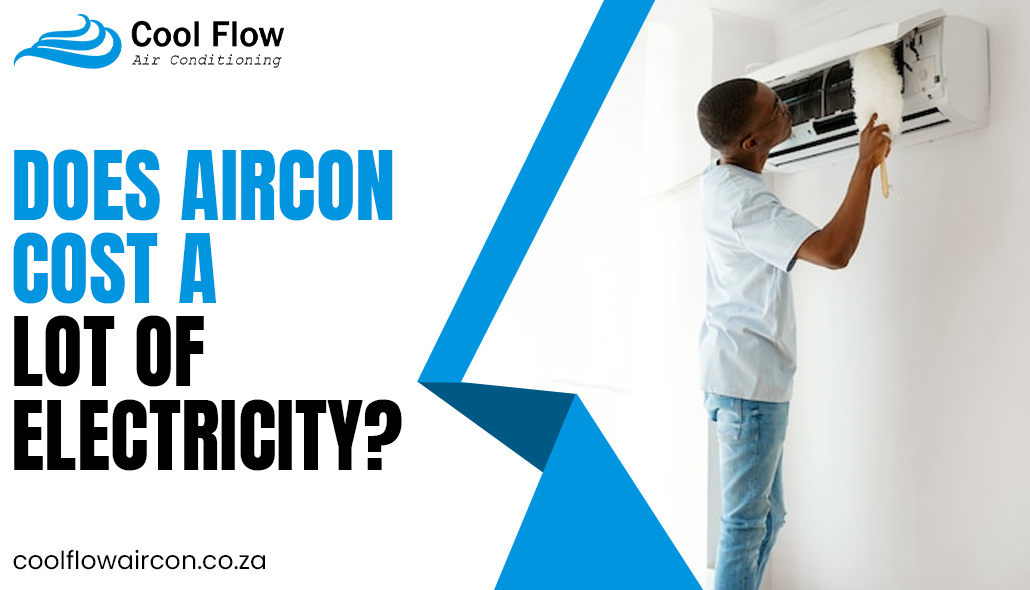
Dirty filters and coils make aircons work harder. Cleaning them every few months boosts efficiency. Regular maintenance also prevents breakdowns. Coolflow Air Conditioning offers expert servicing to keep units running smoothly.
Use Fans to Help
Ceiling or portable fans spread cool air better. This lets you set the aircon to a higher temperature. Fans use way less electricity, so they’re a budget-friendly helper.
Close Curtains and Blinds
Sunlight heats up rooms fast. Closing curtains during the day keeps things cooler. This reduces how hard the aircon works. It’s a simple trick that saves money.
Seal Gaps and Leaks
Check for gaps around windows and doors. Use weather stripping or sealant to close them. This keeps cool air inside and hot air out. Your aircon won’t need to run as much.
Use It Wisely
Turn off the aircon when no one’s home. Set it to a higher temperature when cooling isn’t needed. For example, 24°C is usually enough for comfort in Cape Town’s climate.
Upgrade to an Efficient Model
If your aircon is old, consider a new one. Energy-efficient models cost less to run. Look for units with high energy ratings. They might cost more upfront but save money long-term.
Solar-Powered Aircons: A Game Changer
Solar-powered aircons are gaining popularity for airconditioning in Cape Town. These units use energy from the sun, cutting electricity bills. They’re eco-friendly and great for sunny areas like Cape Town. While the upfront cost is higher, the savings add up over time. Plus, they reduce your carbon footprint.
Comparing Aircon Costs to Other Appliances
How does aircon compare to other home appliances? Let’s break it down. A typical aircon uses 1-2 kW per hour. A fridge uses about 0.1-0.3 kW per hour but runs all day. A TV might use 0.1 kW per hour. So, an aircon uses more power per hour but only runs when needed. Smart usage keeps costs similar to other appliances.
For example, running an aircon for 5 hours a day at 2 kW costs about 20 rand daily (at 2 rand per kW). A fridge running 24 hours at 0.2 kW costs about 9.6 rand daily. The key is to use aircon wisely to avoid high bills.
Common Myths About Aircon Electricity Use
There are some myths about airconditioning in Cape Town. Let’s clear them up.
Myth 1: Aircons Always Cost a Fortune
Not true. Efficient units and smart habits keep costs low. Using eco modes and timers helps a lot. Proper maintenance also reduces electricity use.
Myth 2: Turning Aircon On and Off Wastes More Power
Switching an aircon off when not needed saves energy. Constantly running, it uses more power. Just don’t turn it on and off every few minutes.
Myth 3: Lower Temperatures Cool Faster
Setting the aircon to 16°C doesn’t cool a room faster. It just makes the unit work harder. Stick to 22-24°C for efficiency and comfort.
How to Estimate Your Aircon Costs
Want to know your aircon’s electricity cost? Here’s a simple way. Check the unit’s power rating (in kW). Multiply it by the hours you use it daily. Then multiply by your electricity rate (e.g., 2 rand per kW). For example, a 1.5 kW unit running 4 hours daily costs 1.5 x 4 x 2 = 12 rand per day. Check your bill for the exact rate.
Also, consider seasonal use. In Cape Town, aircons are used more in summer. Winter use is often lower, balancing yearly costs. Planning usage around peak heat helps manage expenses.
Why Energy Efficiency Matters in Cape Town
Cape Town’s climate is warm and sunny for much of the year. This makes airconditioning in Cape Town essential for comfort. But electricity isn’t cheap, and load-shedding can be an issue. Energy-efficient aircons reduce strain on the grid. They also lower bills, leaving more money for other things. Choosing efficient units and habits benefits both your wallet and the environment.
Conclusion
Air conditioners don’t always drain electricity. The cost comes down to how they are used and cared for. Setting a steady temperature and keeping filters clean can make a real difference. Small habits like these often lower bills without reducing comfort. It’s also worth remembering why aircon matters. A cool room helps with sleep, focus, and overall health. That comfort is priceless, especially during long hot days. For homes and businesses, the goal is balance. Use the unit wisely and enjoy the benefits without the stress of high bills. If you’re ready to take the next step, connect with Coolflow Air Conditioning today. Stay cool, save energy, and enjoy the comfort you deserve.